The Unseen Life of a Snag
Why Dead Trees are Essential to the Midwest Ecosystem
For years, we’ve been conditioned to see dead trees, or snags, as messy or hazardous. We call them 'eyesores' or 'firewood' and rush to clear them out of our yards and parks. But once you have that ecological awakening, that mind-blown moment I had a few years ago, you realize the truth. A snag is not an ending. It is a vital chapter in the life of the forest. Removing large dead trees and logs is causing ecological damage we can't even imagine.
All the native flora and fauna have evolved for eons having these present. A dead tree standing tall is just a vertical version of that rotting log I was fascinated by in the woods as a child, providing structure and shelter for hundreds of species. If you want to talk about building habitat on your property, leaving that snag standing is one of the single most powerful things you can do.
The True Structure of a Tree
We need to first change our view of tree health. When a tree is hollow or has large cavities, it does not mean the tree is sick and needs to be cut down. These are some of the most valuable trees we have.
Trees grow out not up. The meristem cells at the tips of the branches are the only place a tree grows longer, either up or out. The trunk and branches are only alive on the outer cambium layer. Once that layer is laid down, the inner wood, known as the heartwood, is merely structural. It is no longer part of the tree's living nutrient cycle and is essentially dead. When a tree develops a cavity, it is the inner, non-functional heartwood that has decayed, not the living outer layer. These structural snags are often the best nesting sites in the entire ecosystem.
The Apartment Building of the Woods
Think of a snag as a high-rise apartment apartment building for wildlife. From the moment the inner heartwood begins to decay, the tree starts a second life supporting the food web.
For Birds
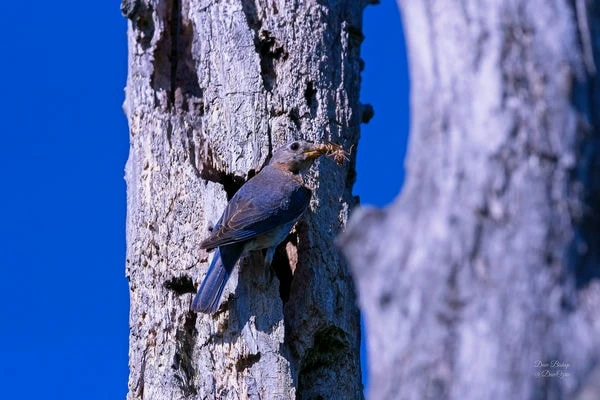
- Cavity Nesters: Up to a third of all North American bird species rely on these cavities for nesting. In the Midwest, we rely on snags for species like the Eastern Bluebird, Wood Duck, Chickadees, Titmice, and Nuthatches. Woodpeckers, especially Downy and Hairy Woodpeckers, are the construction crew. They drill the original holes, creating condominiums that other birds move into once they are done.
- Foraging Platforms: Woodpeckers, like the Pileated Woodpecker that excavates huge rectangular holes, feed on the thousands of insects that move into the decaying wood. When you see a woodpecker working on a snag, it is not destroying the tree it is mining for protein. This is a critical food source, especially for baby birds that require soft-bodied insects.


For Insects and Fungi
The true work of the snag begins with decomposers. Fungi are the initial colonizers, breaking down the complex compounds in the wood. This process creates the soft texture that insects love. Beetles, especially species whose larvae are known as grubs, bore into the wood. These larvae are a high-fat, high-protein food source for everything from raccoons to your backyard birds.
This decay also contributes directly to the soil, which is the foundation of the entire ecosystem. The snag is slowly decomposing into rich organic matter, effectively creating natural compost right where it is needed most.

From Standing to Ground
The ecological value of the snag shifts as it ages.
In its initial standing phase, it provides shelter, nesting sites, and hunting perches for birds of prey. Once that snag eventually falls, it becomes a nurse log. This fallen wood continues its role as shelter and incubator. Salamanders, toads, and various small mammals use the space beneath the log for cover from predators and for overwintering.
The most critical long-term job of the nurse log is decomposition. For those of us working hard to replace invasive species like buckthorn with natives, these logs are slowly breaking down, adding essential organic matter and structure to the mineral soil over time. This process is how the log actively creates healthy new soil for the next generation of native plants.
A Call to Worldview Change
Humans view trees as specimens, not ecological functions. We need to change our worldview to see the value in things that appear messy or dead.
If you have a dead or dying tree that does not pose a risk to your house, sidewalk, or power lines, consider leaving it. If it is too tall, you can hire an arborist to "top" the tree, removing the upper limbs that might be hazardous while leaving a tall, structural column of dead wood.
This single, simple action transforms a patch of lawn into a crucial piece of the Midwest food web. It is a loud declaration that you value biodiversity and ecological function over mere aesthetics.
We are all on this path of rewilding our properties and our minds. Just as I learned that leaving the leaves is essential, leaving the dead wood is also vital. The natural world will never run out of things to learn. Embrace the snag. It is one of the most vibrant pieces of life in your ecosystem.
“Remove a snag and you erase decades of ecological infrastructure that no landscaping plan can replace.”