
Chinese and European Mantids Are Invasive: Here Is Why It Matters
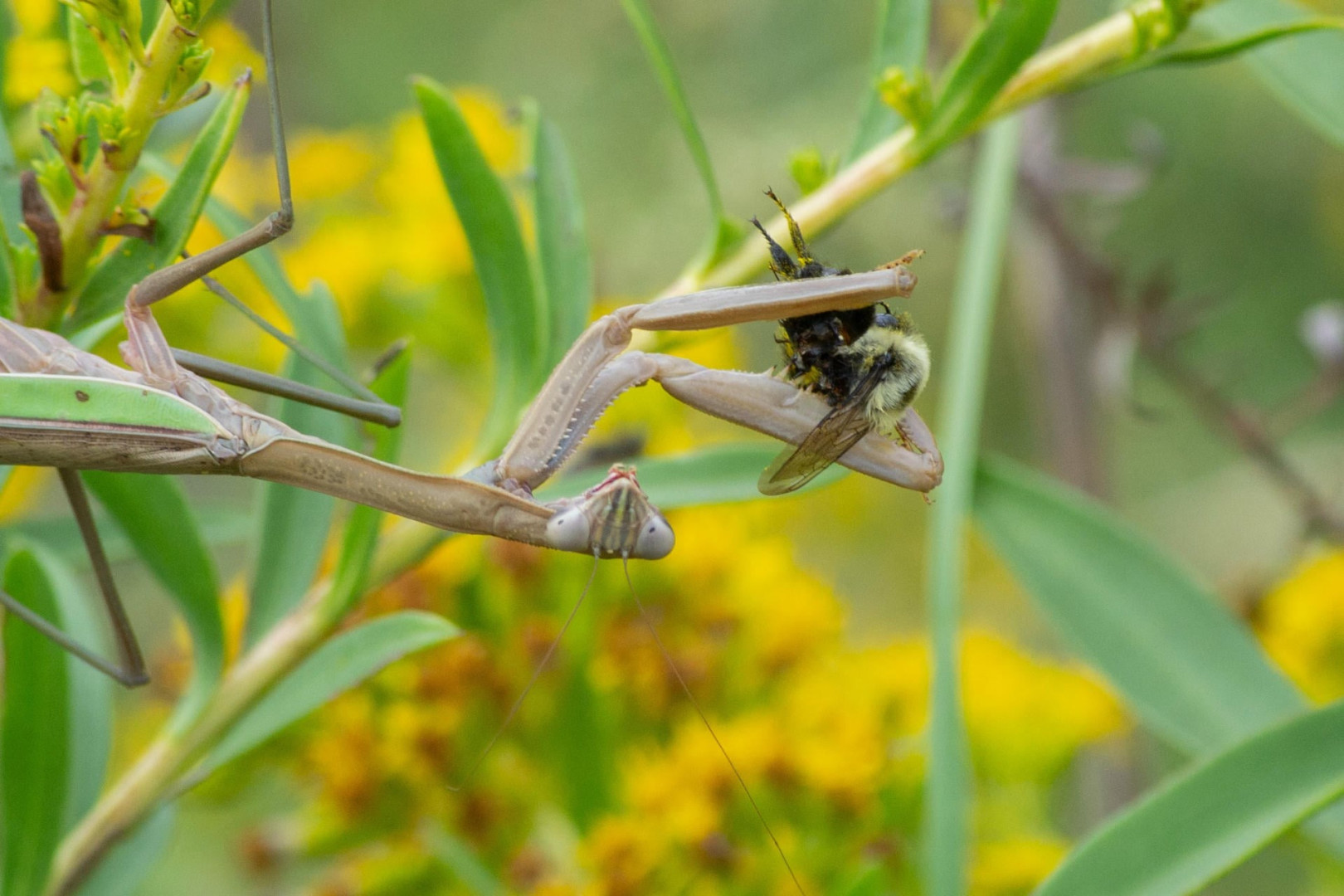
Abstract. Non-native mantids, primarily the Chinese mantid (Tenodera sinensis) and the European mantid (Mantis religiosa), have lived in North America for more than a century. Although admired as graceful garden helpers, their spread and feeding behavior match the scientific definition of an invasive species. This article explains how invasions develop slowly through the lag phase, why these mantids escaped formal recognition, and what current research shows about their densities, diets, and ecological effects. Field studies report adults at 40 to 158 per acre (10 to 39 per 1,000 m²) in suitable habitat -- numbers most people never see because mantids stay hidden until harvest or disturbance flushes them. Applying those measured densities to conservative national habitat estimates produces a plausible range of 5 to 28 billion adults at peak season, consuming somewhere between 600 billion and 27 trillion prey items annually. DNA diet studies show that prey includes pollinators, beneficial predators, and even small vertebrates. Both species also prey on threatened and endangered insects including the rusty-patched bumble bee (Bombus affinis) and the Karner blue butterfly (Lycaeides melissa samuelis). The article concludes with a full reference section and an FAQ.
Part I: The Case in Plain Language
A pattern I keep seeing
I have been studying and restoring native ecosystems for several years and have noticed a growing trend with non-native mantids that deserves far more attention. Each fall, as the season winds down, I see a flood of posts on social media showing large mantids perched on fences, porches, or window screens. These images are almost always of mantids that have strayed from their natural hiding places. They spend most of their lives deep in tall grass or dense vegetation, so the few we notice give a false impression that they are uncommon when in reality they can be abundant in suitable habitats.
The reactions to those posts are almost identical every year. People admire them, share hearts and likes, and rush to defend them as helpful garden protectors. Many claim they are now part of the ecosystem, naturalized, or not causing any harm. Yet there is no scientific evidence to support those claims. What we see instead is affection for the genus itself, not a realistic assessment of its ecological role.
That affection has created a powerful blind spot. The Chinese mantid (Tenodera sinensis) and the European mantid (Mantis religiosa) are not native, and their growing presence across the United States shows all the hallmarks of an invasive species. They are large, generalist predators that consume pollinators, native mantids, and even small vertebrates. Their rise has gone largely unnoticed because they are charismatic, solitary, and difficult to study.
We are living in the middle of a global decline in insects, and scientists warn that we are entering an era of mass extinction for invertebrate life. This is not the time to ignore another apex predator establishing itself quietly in our backyards. The goal of this article is to clear up the confusion, separate facts from assumptions, and show that these insects, while fascinating, have become a real ecological concern.
How invasions really work
Invasions rarely begin with dramatic takeovers. Most start quietly. A few individuals arrive, survive, and reproduce in small numbers. Scientists describe this as the lag phase, the long period when a species appears harmless because its population is still small. During this time it may blend in, stay confined to disturbed areas, or depend on occasional human introductions to persist. Then, once conditions shift in its favor, growth accelerates and what looked stable begins to spread. Lags can last decades or centuries, which is why the absence of obvious harm today does not guarantee safety tomorrow.
Other invaders that followed the same pattern
Many harmful invaders began just like the Chinese and European mantids, as admired or tolerated introductions that took decades to show their effects.
- Common buckthorn (Rhamnus cathartica) was imported in the mid-1800s as a hedge and wildlife plant. It was widely planted for about 100 years before its suppression of forest regeneration led to broad recognition as invasive.
- Garlic mustard (Alliaria petiolata) arrived in the 1800s and remained a minor garden escape for decades. It surged in the late 20th century as forests fragmented and deer pressure increased.
- Multiflora rose (Rosa multiflora) was promoted for erosion control in the 1930s through the 1950s. Within about 40 years it became a dominant shrub displacing pasture and understory communities.
- Japanese barberry (Berberis thunbergii) was introduced in the 1800s and took nearly 120 years before regulation began after dense thickets were shown to suppress tree seedlings and alter soils.
- Emerald ash borer (Agrilus planipennis) was discovered in 2002 but tree-ring analysis indicated it had been present for years before populations erupted and caused continent-scale ash mortality.
These examples show how invasions simmer until climate, disturbance, or simple population buildup removes remaining checks. The mantids fit the same trajectory: non-native for over 100 years, long assumed harmless, and now common in edge habitats where their effects are easy to underestimate.
The mantid timeline
The Chinese mantid (Tenodera sinensis) was first documented near Philadelphia in 1896. The European mantid (Mantis religiosa) appeared near Rochester, New York in 1899. Both likely arrived with nursery plants. For about 50 years they remained regional curiosities while slowly spreading through the Mid-Atlantic and Great Lakes. By the mid-20th century they were established across much of the eastern United States, and by the end of the century they had reached coast to coast. Focused ecological studies increased mainly in the 21st century. That long delay fits the textbook pattern of an invasion lag.
The illusion of rarity
Mantids are ambush predators that stay hidden among tall stems and leaves. People usually notice them only when they wander into open spaces. This visibility bias makes them look scarce. Field work reports 40 to 158 adults per acre (10 to 39 per 1,000 m²) in suitable late-summer habitat. The handful seen in gardens each fall are the outliers that left cover. Inside meadows and field edges their numbers can be much higher than casual sightings suggest.
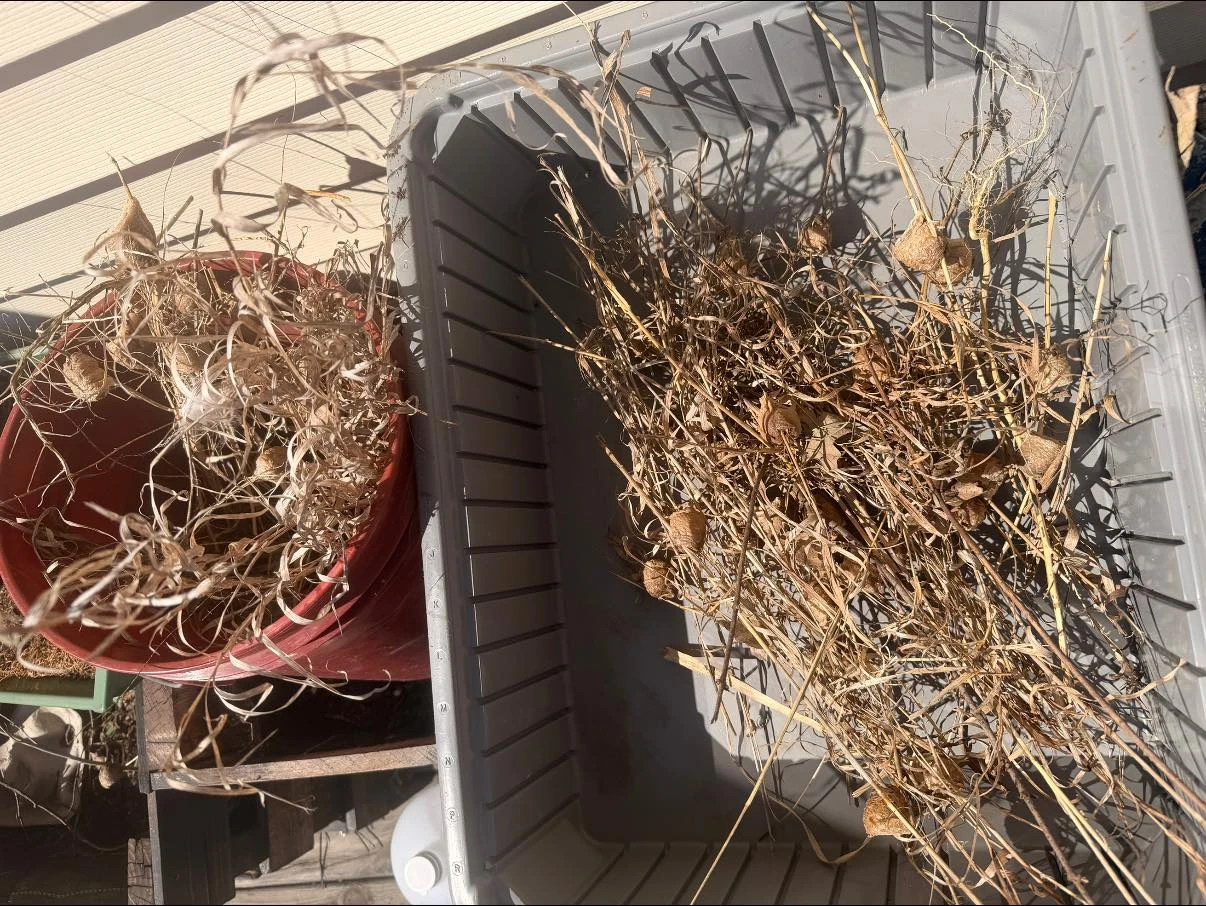
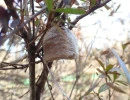
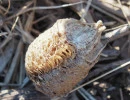
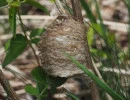
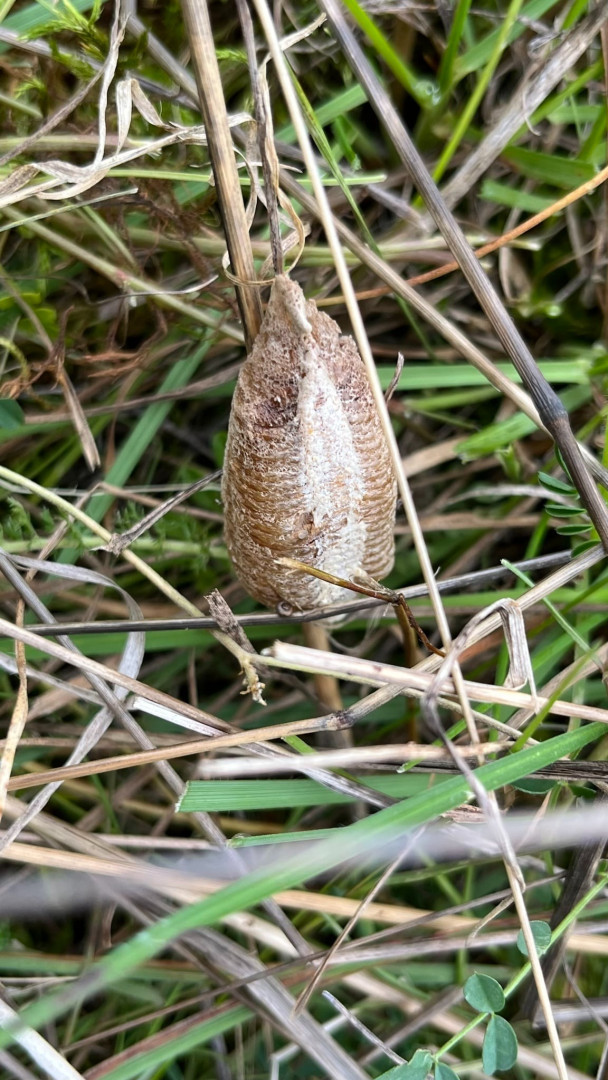
This post from March 23, 2026 in Illinois illustrates exactly what the density research predicts is happening across the eastern United States. This property owner found over 200 egg cases within 50 feet of his house alone, with more still uncollected on trees, and has 25 additional acres of native prairie beyond that. He has no Carolina mantids anywhere on his property.
So I have about 200 (probably more I’ve yet to see) Chinese Mantis oothecas literally within 50 ft circumference of my home here in Illinois. I have native prairie lands as well with native flowers on my additional 25 acres.
I contacted Arbico Organics last year asking why they sell these egg casings if they are considered invasive. Their response was that they’ve been here long enough to no longer be considered an “invasive species”. And they’ve been found to be beneficial here in the states now. We do not have any Carolina mantis here on my property. I was thinking of destroying these and buying some Carolina oothecas.
I’m so confused.
The ones collected here in both tubs surpass 100 that were on my native grasses with over a 100 more still attached to my trees.
Invasives that are recognized but rarely listed
The United States has a long history of species that meet every ecological and behavioral test for being invasive but remain absent from most official lists. These cases show that absence of a listing does not equal absence of harm.
- House sparrow (Passer domesticus) introduced in the 1850s displaced native cavity-nesting birds across North America, yet appears on few formal invasive lists due to ubiquity and social tolerance.
- European honey bee (Apis mellifera) is economically valuable but competes with native bees and can spread pathogens. It is not listed as invasive despite documented ecological costs.
- Feral cat (Felis catus) kills an estimated 1.3 to 4 billion birds and 6 to 22 billion small mammals annually in the US, is recognized by wildlife biologists as one of the most damaging invasive predators on the planet, and remains absent from most formal invasive lists due to intense public opposition and cultural attachment.
- Earthworms (Lumbricus spp.) are entirely non-native in the northern US. Their invasion of formerly worm-free forests alters soil structure, reduces native wildflower communities, and destabilizes forest regeneration. They are rarely discussed as invasive because they are seen as beneficial in gardens.
The federal National Invasive Species Information Center (NISIC), maintained by the USDA, publishes a species profiles list covering more than 150 documented invasive species. Neither the Chinese mantid nor the European mantid appears on it. The house sparrow and European honey bee are absent as well. NISIC addresses this directly: "There are more than 6,500 invasive species established across the United States. The large numbers of invasive species prevent us from maintaining detailed information on all invasive species." Absence from this list is not a determination of safety. It reflects staffing, priorities, and the overwhelming scale of the problem. No one seriously argues the house sparrow is ecologically benign because it lacks a federal profile page. The same logic applies to the mantids.
A closer look at the NISIC list reveals something worth noting. The overwhelming majority of species profiled there are listed because of economic or agricultural harm - crop pests, livestock diseases, timber threats, aquatic invasives that damage infrastructure. Species that quietly disrupt food webs and erode biodiversity without costing farmers or timber companies money tend to fall through the cracks. The mantids are a textbook example. They don't damage crops, they don't kill livestock, they don't clog water intake pipes. They eat pollinators and native insects by the billions, which doesn't show up on anyone's balance sheet. That is not an accident of oversight. It is a structural bias in how the regulatory system was built, and it is exactly why ecologically harmful species can remain unrecognized for generations.
The Threat to Native Mantids
One impact that gets little attention is what these introductions do to native mantid species. The Carolina mantid (Stagmomantis carolina) is the only native mantid across much of the eastern United States. It is roughly half the size of the Chinese mantid and cannot compete for the same food resources. Conservation observers report that the Carolina mantid is in decline in areas where Chinese and European mantids are well established. The non-native species outcompete it for prey and prey on it directly. The Chinese mantid literally eats the native mantid it is often sold to replace.
The ESA angle: when prey is protected
Under the federal invasive species definition, environmental harm includes reducing populations of species listed as threatened or endangered under the Endangered Species Act. Two insects in that category are confirmed prey items for non-native mantids.
The rusty-patched bumble bee (Bombus affinis) was listed as federally threatened in 2017 and now occupies less than 0.1 percent of its historic range in the Midwest, eastern United States, and Canada. It forages in open and edge habitats that overlap with where Chinese mantids hunt, and it is exactly the kind of insect a generalist ambush predator would take opportunistically. A predator does not need a documented kill record on a specific species for its presence to matter. When an introduced predator measurably increases mortality risk for a federally protected species, that satisfies the harm based definition of invasive, regardless of whether it appears on any formal list.
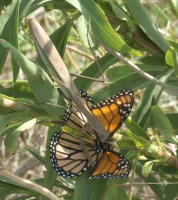
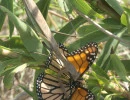
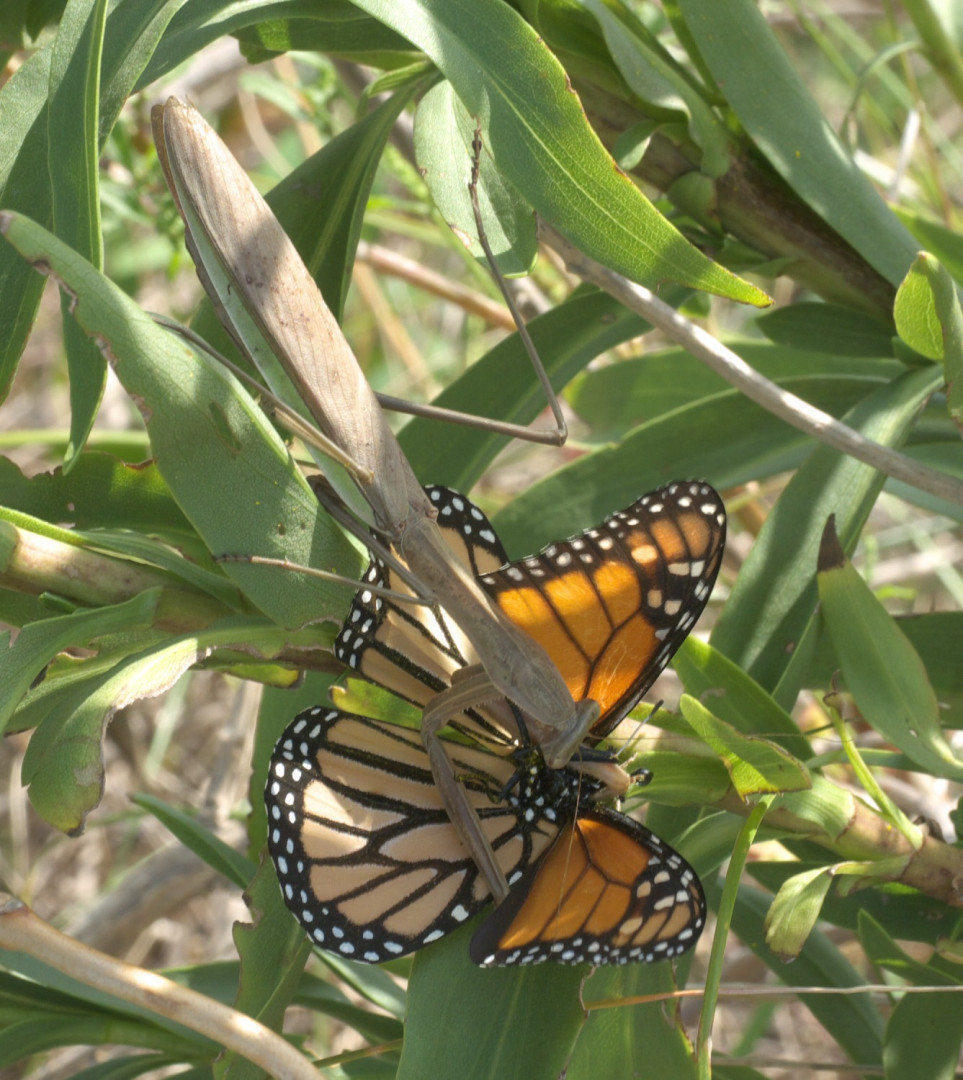
Chinese mantids are documented predators of monarch butterflies, with naturalists and gardeners regularly reporting captures at milkweed patches and nectar sources across the mantis's introduced range. Monarchs make easy prey: they fly slowly, nectar in the open, and cluster at exactly the kind of flowering edge habitat where Chinese mantids hunt. The monarch population has declined by more than 80 percent since the 1990s, and the U.S. Fish and Wildlife Service proposed listing it as threatened under the Endangered Species Act in December 2024, though a final decision remains pending. A species already under this much pressure from habitat loss, pesticides, and climate change does not need an additional novel predator pressing on it, especially one with no evolutionary history with its prey.
Numbers that matter
Start with what field research actually measured. Christensen and Brown (2018) documented 40 to 158 adults per acre in suitable old-field habitat in Pennsylvania. Most people have never seen more than two or three mantids in one place. That gap between what we observe and what is actually present is the whole point.
Those field densities are not outliers. Native seed farmers who work tall-vegetation habitats at harvest sometimes encounter mantids in numbers that look nothing like a garden curiosity. The habitat conditions match what the Pennsylvania study measured: dense vegetation, high insect diversity, minimal disturbance until late summer.
The table below applies those measured densities to conservative estimates of suitable habitat nationally. Suitable habitat means old fields, native meadows, unmowed roadsides, field edges, and native plantings -- the same structural conditions where the density figures were recorded. The 10 to 20% suitability figures by region are modeled assumptions, not surveyed counts. They are deliberately conservative. The resulting population estimates are a plausible range based on measured field data, not a census.
| Region | % land suitable | Occupied area (km²) | Plausible adult population |
|---|---|---|---|
| Northeast (~700,000 km²) | 10% | ~35,000 | 350 million to 2 billion |
| Upper Midwest and Great Lakes (~1,000,000 km²) | 20% | ~100,000 | 1 to 6 billion |
| Central and Plains (~1,500,000 km²) | 20% | ~150,000 | 1.5 to 9 billion |
| Southeast (~1,000,000 km²) | 15% | ~75,000 | 700 million to 4.5 billion |
| Western and Pacific states (~2,000,000 km²) | 10% | ~100,000 | 1 to 6 billion |
| Nationwide total (peak years) | Mixed | ~460,000 | About 5 to 28 billion |
What that means for prey
Each adult mantid eats roughly 2 to 8 prey items per day across an active season of 60 to 120 days. Applying that to the population range above:
- Low end: 5 billion adults x 2 prey per day x 60 days = roughly 600 billion kills per year
- High end: 28 billion adults x 8 prey per day x 120 days = roughly 27 trillion kills per year
A reasonable mid-range estimate sits in the low trillions annually. The majority of that predation occurs in the flower-rich edge habitats where pollinators concentrate, meaning a disproportionate share of victims are bees, butterflies, and other beneficial insects rather than crop pests. These are not small numbers applied to a species in decline. This is sustained, large-scale predation pressure operating silently across the landscape every summer.
Where this leads
The story is not about blame. It is about awareness. Beauty and charisma do not erase ecological cost. If the goal is to rebuild resilient ecosystems, then we must look past admiration and measure real effects. That includes stopping intentional releases of egg cases, protecting native mantids, and recognizing how lag-phase invaders can build silently for years before the damage becomes obvious.
Part II: The Science Behind the Claims
Definitions
Introduced: moved outside its native range by people.
Naturalized: not native and of foreign origin but reproducing without human fostering. Source: USDA NRCS Technical Note 9. Naturalized is a neutral descriptor. It does not mean safe or beneficial.
Invasive: a non-native organism whose introduction does or is likely to cause economic or environmental harm or harm to human health. Source: United States Executive Order 13112 and subsequent federal policy.
Environmental harm includes predation or competition that negatively affects native species, especially those classified as threatened or endangered. When a non-native organism reduces the survival or reproductive success of such species, directly or indirectly, it meets the harm criterion for being considered invasive.
Population estimates by region
The table below uses density figures from peer-reviewed field work (10 to 39 adults per 1,000 m²) and conservative habitat suitability assumptions to estimate plausible adult populations by region at peak season.
| Region | % land suitable | Occupied area (km²) | Plausible adult population |
|---|---|---|---|
| Northeast (~700,000 km²) | 10% | ~35,000 | 350 million to 2 billion |
| Upper Midwest and Great Lakes (~1,000,000 km²) | 20% | ~100,000 | 1 to 6 billion |
| Central and Plains (~1,500,000 km²) | 20% | ~150,000 | 1.5 to 9 billion |
| Southeast (~1,000,000 km²) | 15% | ~75,000 | 700 million to 4.5 billion |
| Western and Pacific states (~2,000,000 km²) | 10% | ~100,000 | 1 to 6 billion |
| Nationwide total (peak years) | Mixed | ~460,000 | About 5 to 28 billion |
What the research actually shows
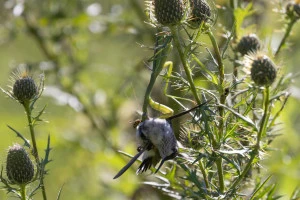
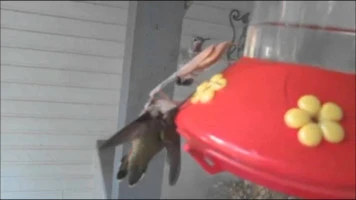
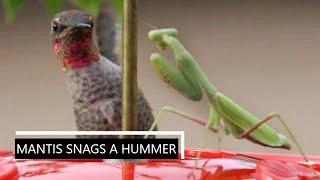
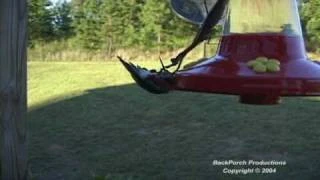
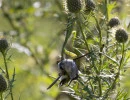
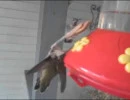
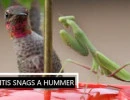
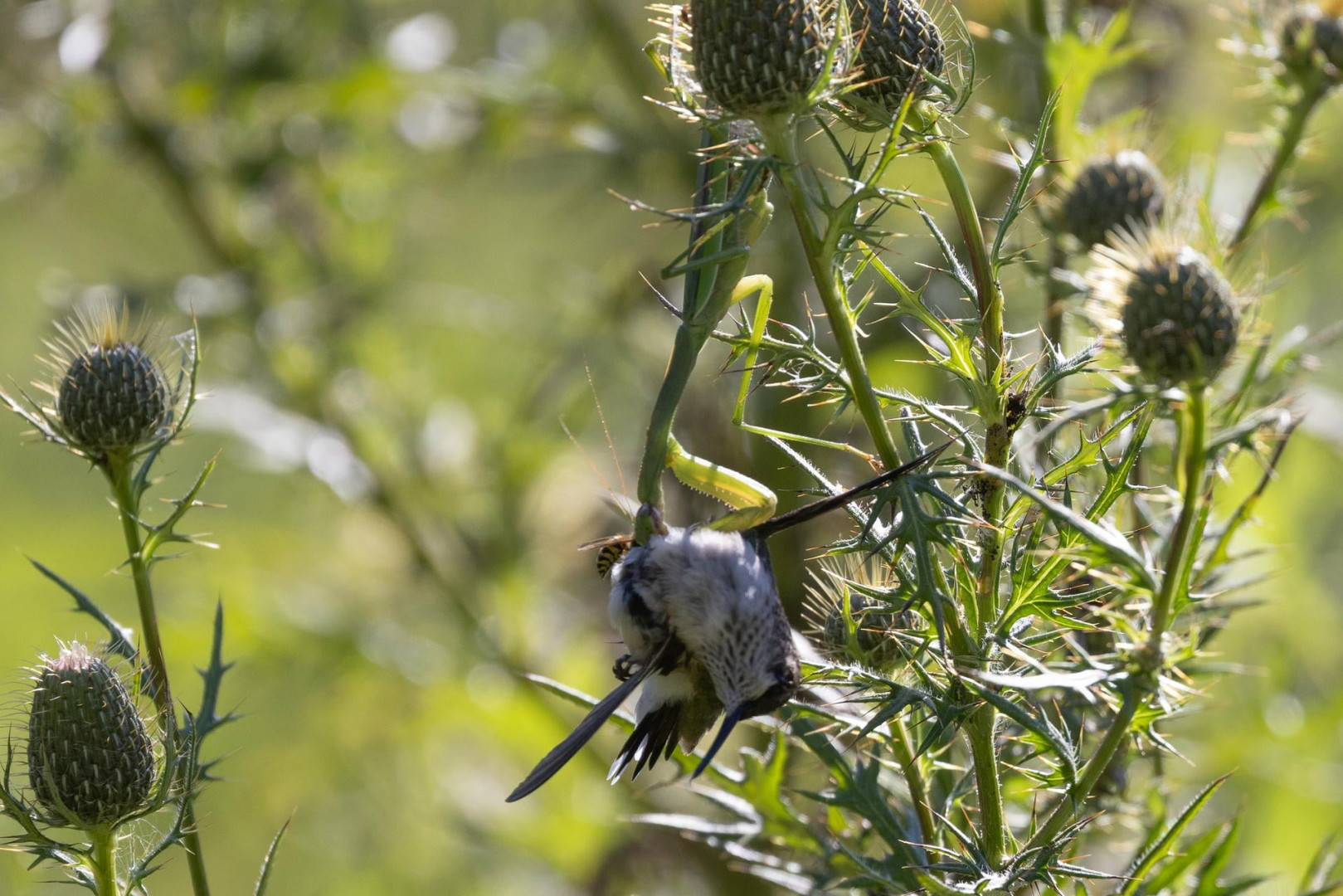
- Bird predation events by mantids are well documented globally, with hummingbirds frequently recorded among North American cases.
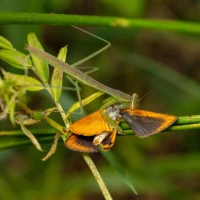
- DNA-based diet work shows prey across nearly every major arthropod order, including bees, butterflies, beetles, flies, and other mantids.
- Behavioral suppression studies show that even the presence of mantid chemical cues reduces bee foraging activity, meaning predation impacts extend beyond actual kills.
- Native predator suppression: native wolf spiders reduce movement and foraging in response to chemical cues from Chinese mantids, weakening natural pest control.
- Community-level syntheses show mantids reduce both herbivore and predator guilds, indicating broad food web disruption rather than selective removal of crop pests.
- Climate linkage: a 20-year field study links reproductive success and population structure to climate and habitat change, implying potential for population growth as conditions warm.
A mantid researcher's field perspective
The density and biomass numbers above are backed by peer-reviewed field work, but they also align with what active mantid researchers observe on the ground. Lohitashwa Garikipati is a doctoral candidate at the American Museum of Natural History who has studied and kept mantids for 15 years, has described a new native species from Arizona, and is one of the most frequently cited mantid experts in North American media. In a 2024 interview on the KZYX Ecology Hour, he offered a field-level view of the problem.
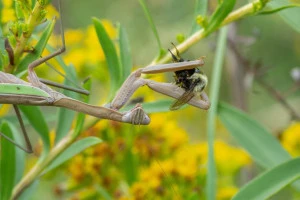
Garikipati described finding Chinese mantids in agricultural fields at densities in the hundreds, concentrated in suitable habitat far beyond what most people ever observe. A single adult female, he noted, can consume two to three dozen bumblebees in a week - and needs to sustain that feeding rate for several more weeks to produce a full egg case.
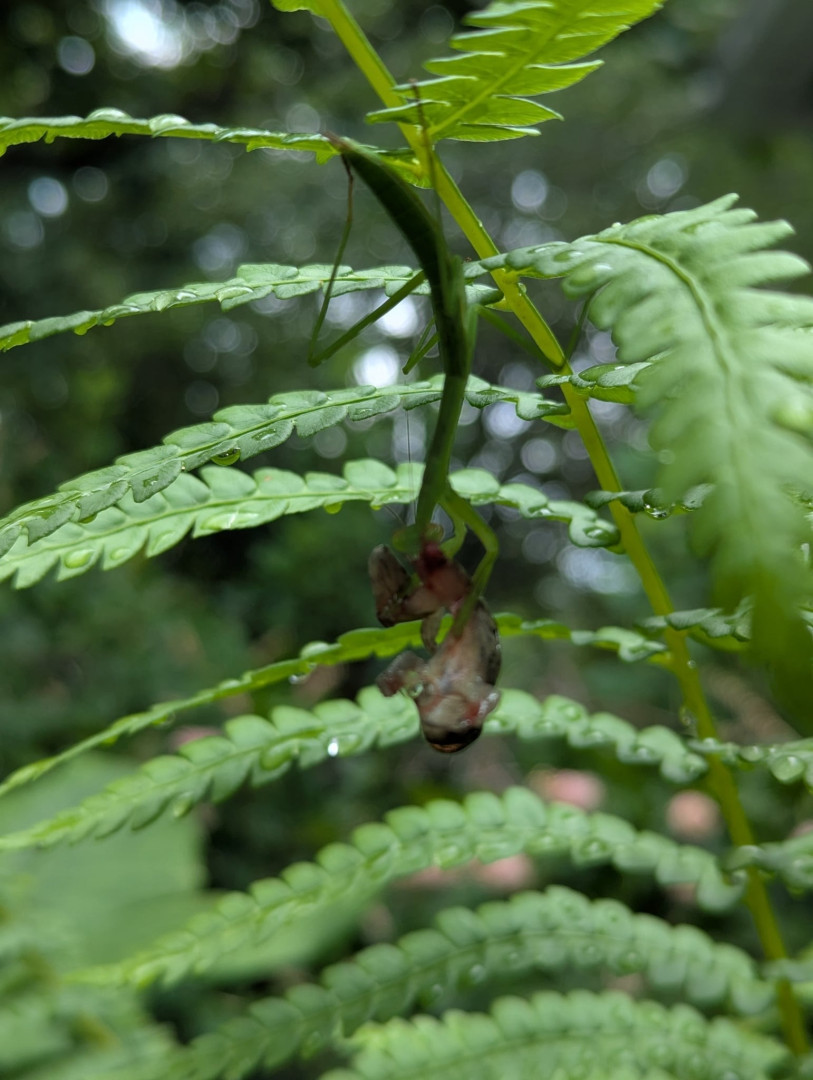
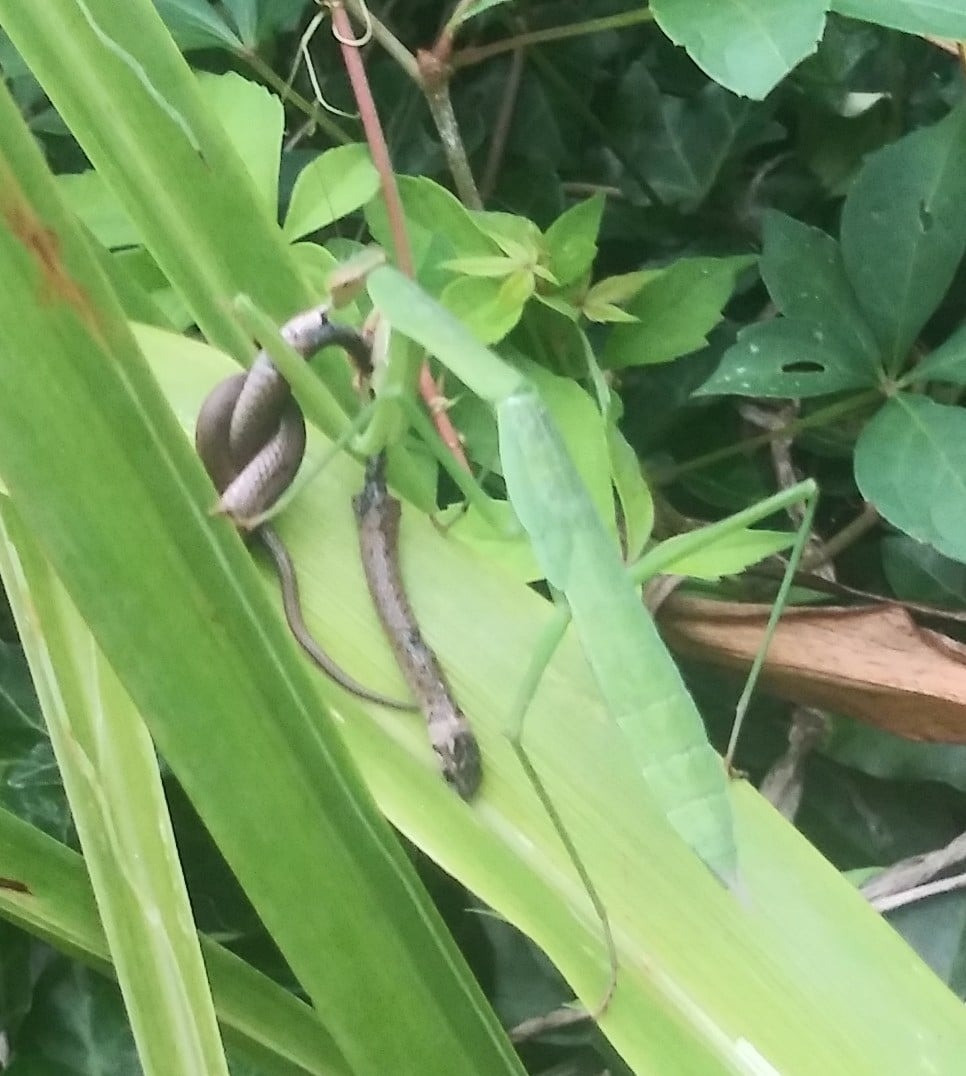
He also pointed to a structural advantage that native species lack. Unlike the Carolina and Arizona mantids, the Chinese mantid arrived without the parasitoid wasps that keep its egg cases in check in its home range. That, combined with its much larger size, means higher egg survival, stronger competition for prey, and the ability to take vertebrate prey - salamanders, frogs, small songbirds - that native mantids simply cannot reach.
He further noted that the two dominant invasive species divide the habitat vertically: European mantids hunt lower in the vegetation, Chinese mantids hunt higher. Together they cover both layers, leaving native mantids with no uncontested space.
Garikipati also identified seven invasive mantid species now established in the US, including the Mediterranean mantis (Iris oratoria), now spreading through California's Central Valley and into Baja California, and the Asian mantis (Statilia maculata), the newest arrival, now established in the Northeast.
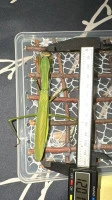
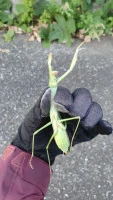
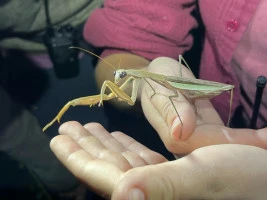
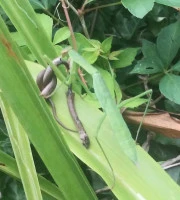
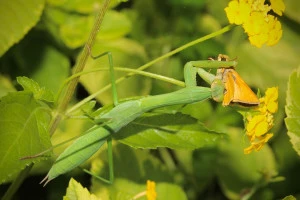
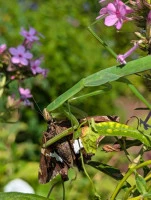
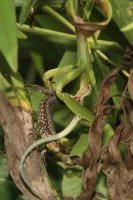
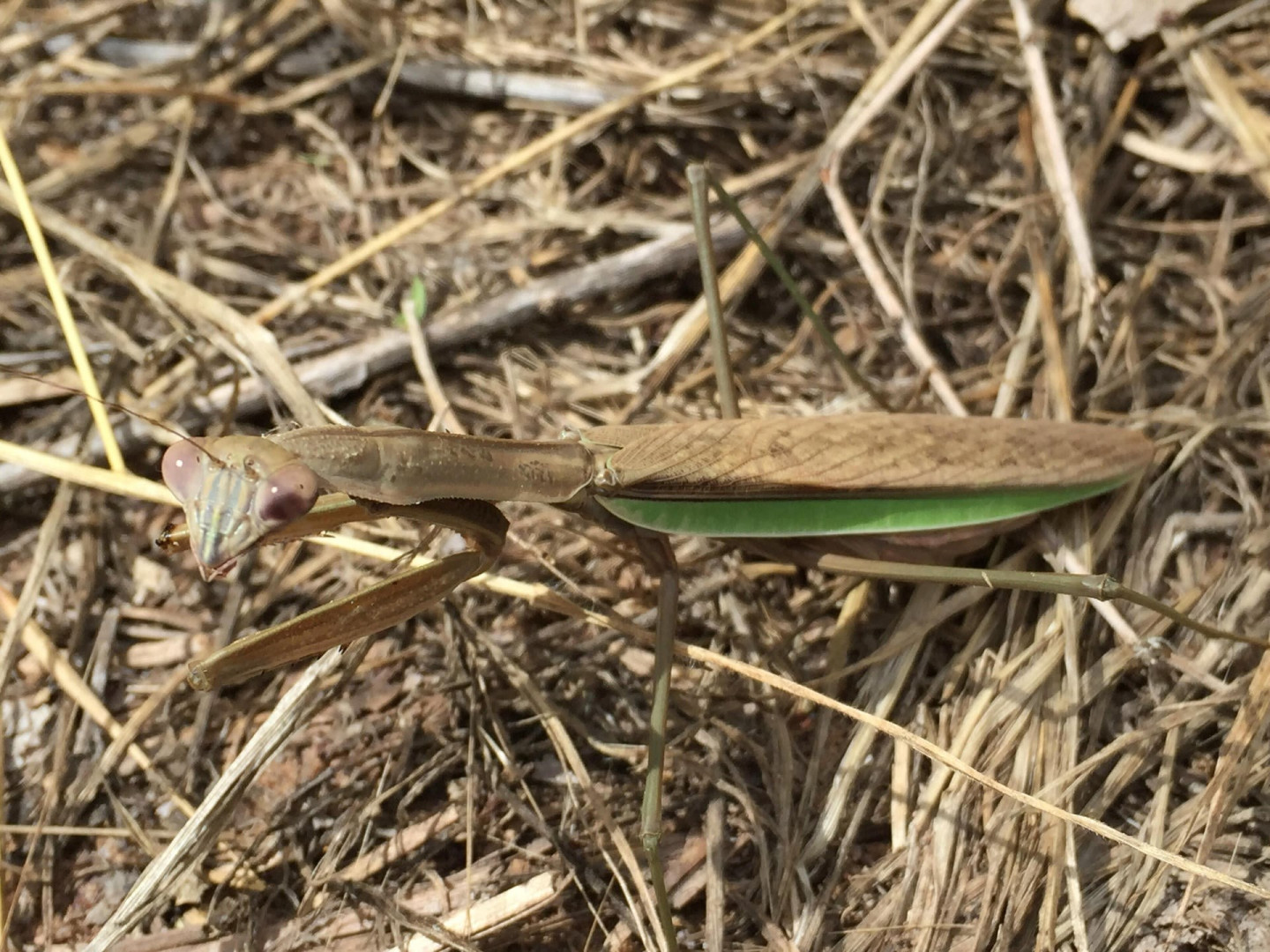
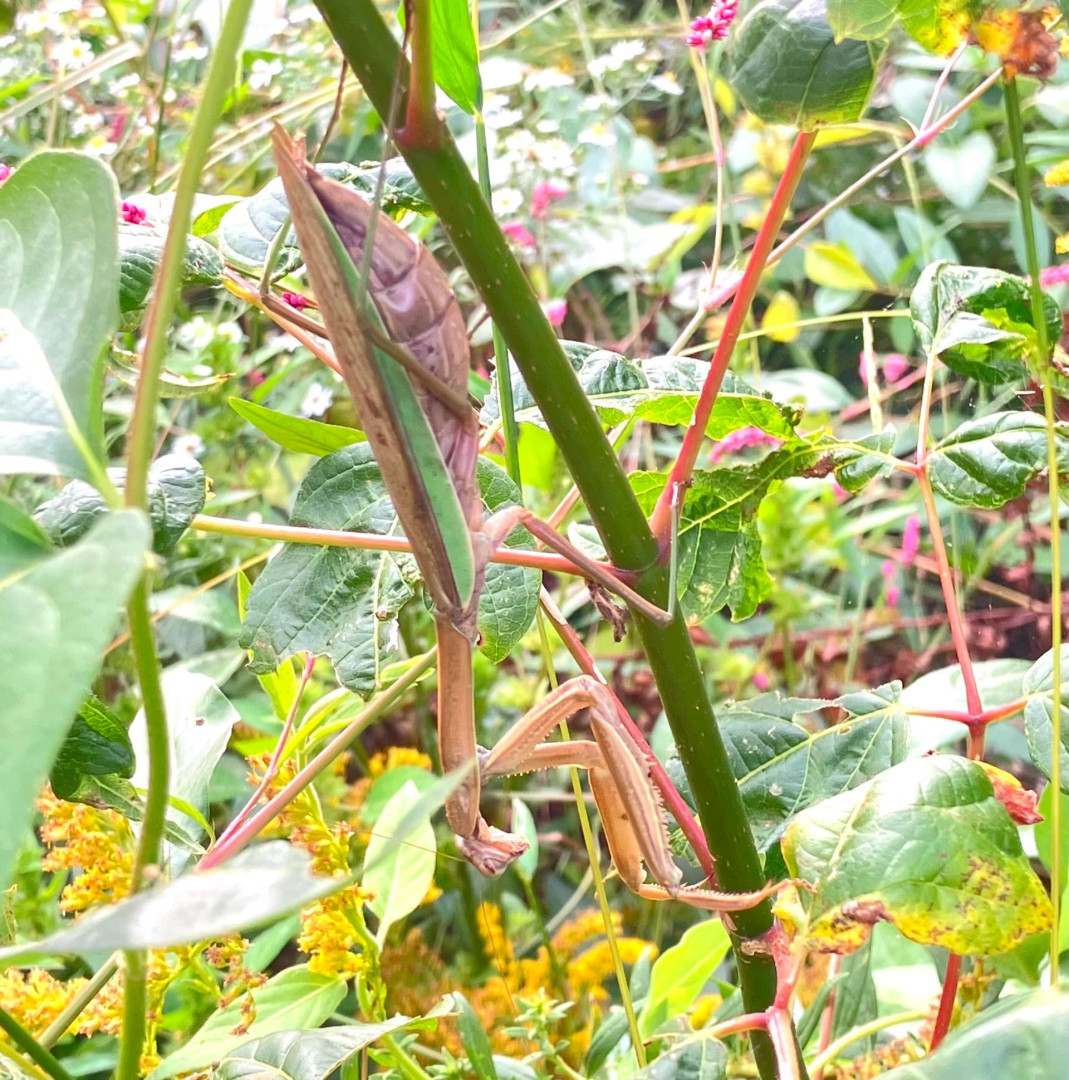
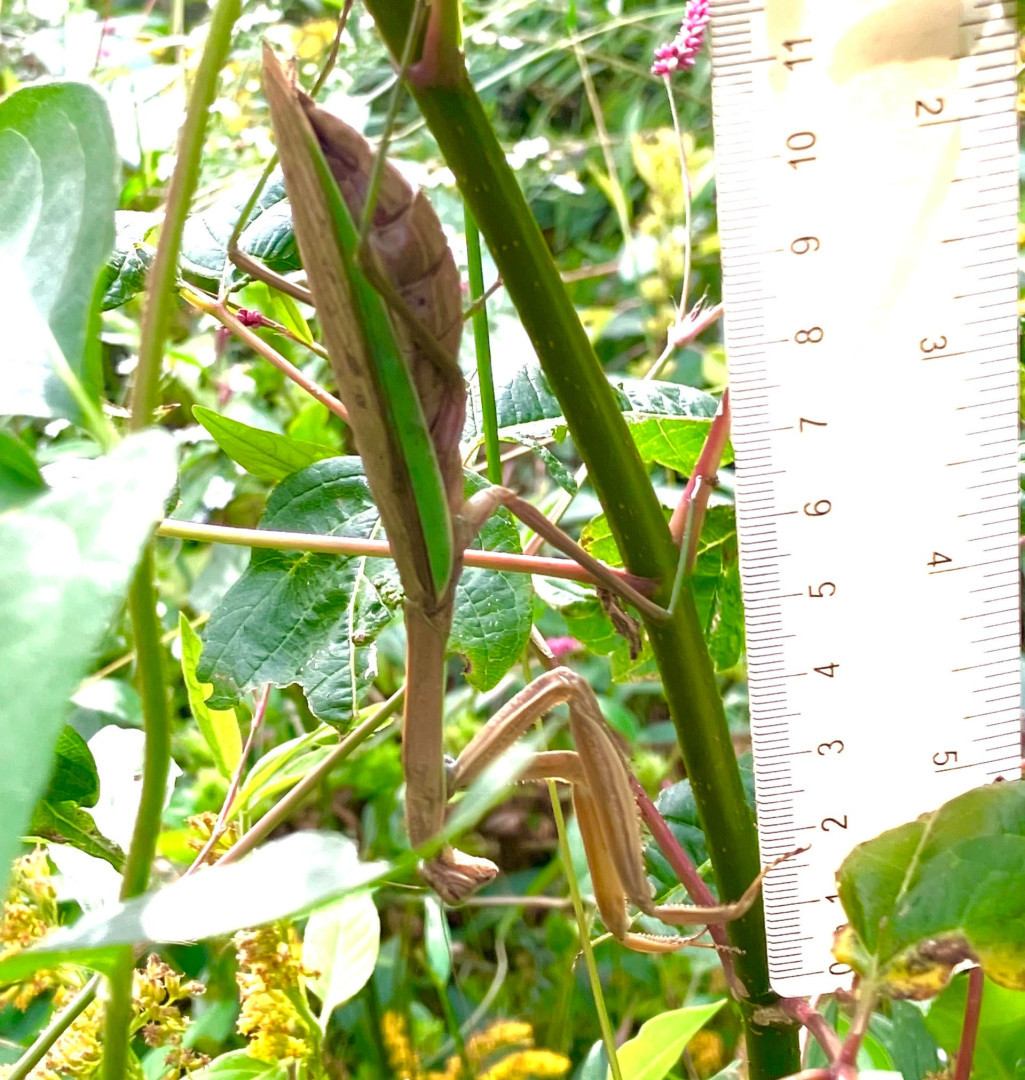
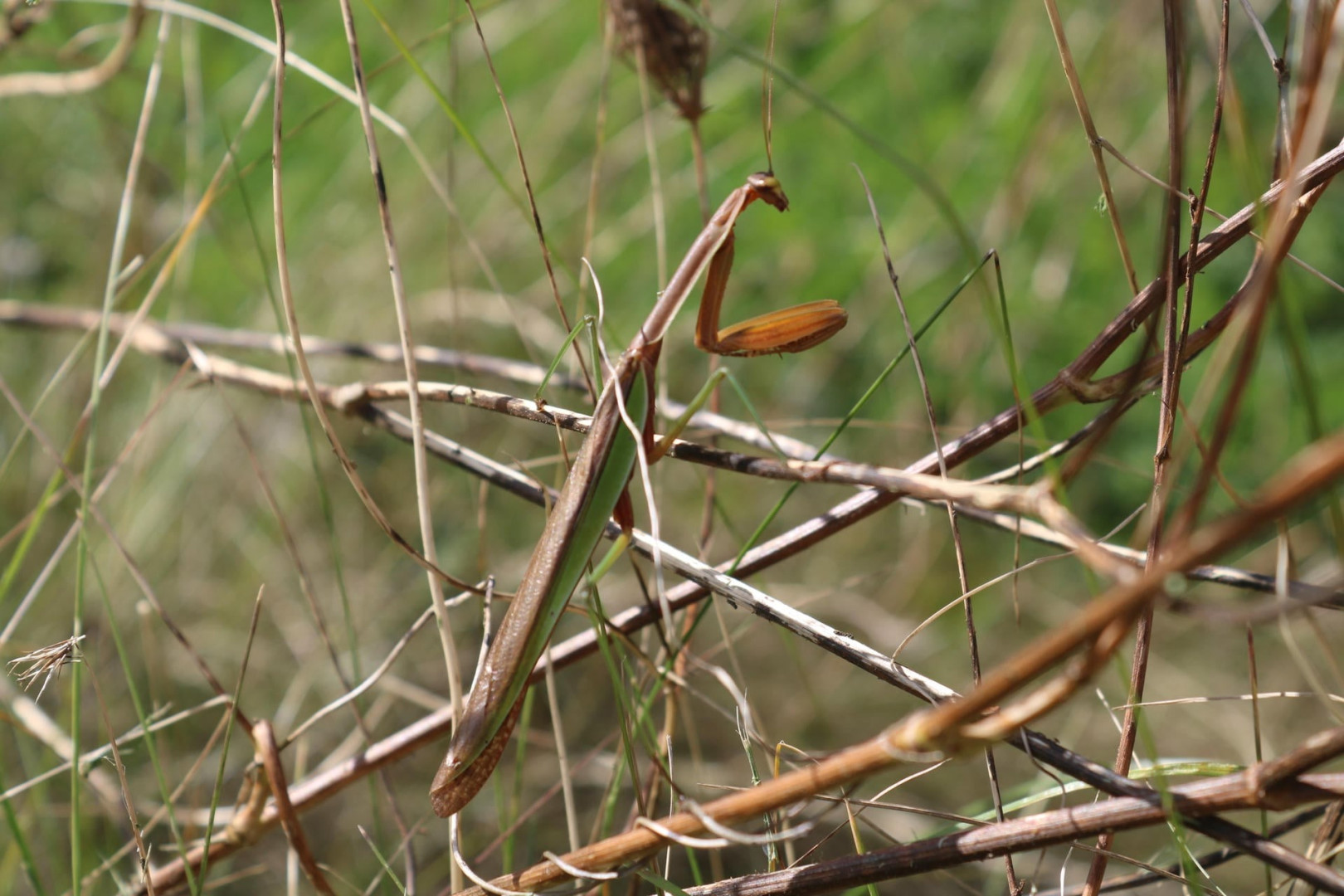
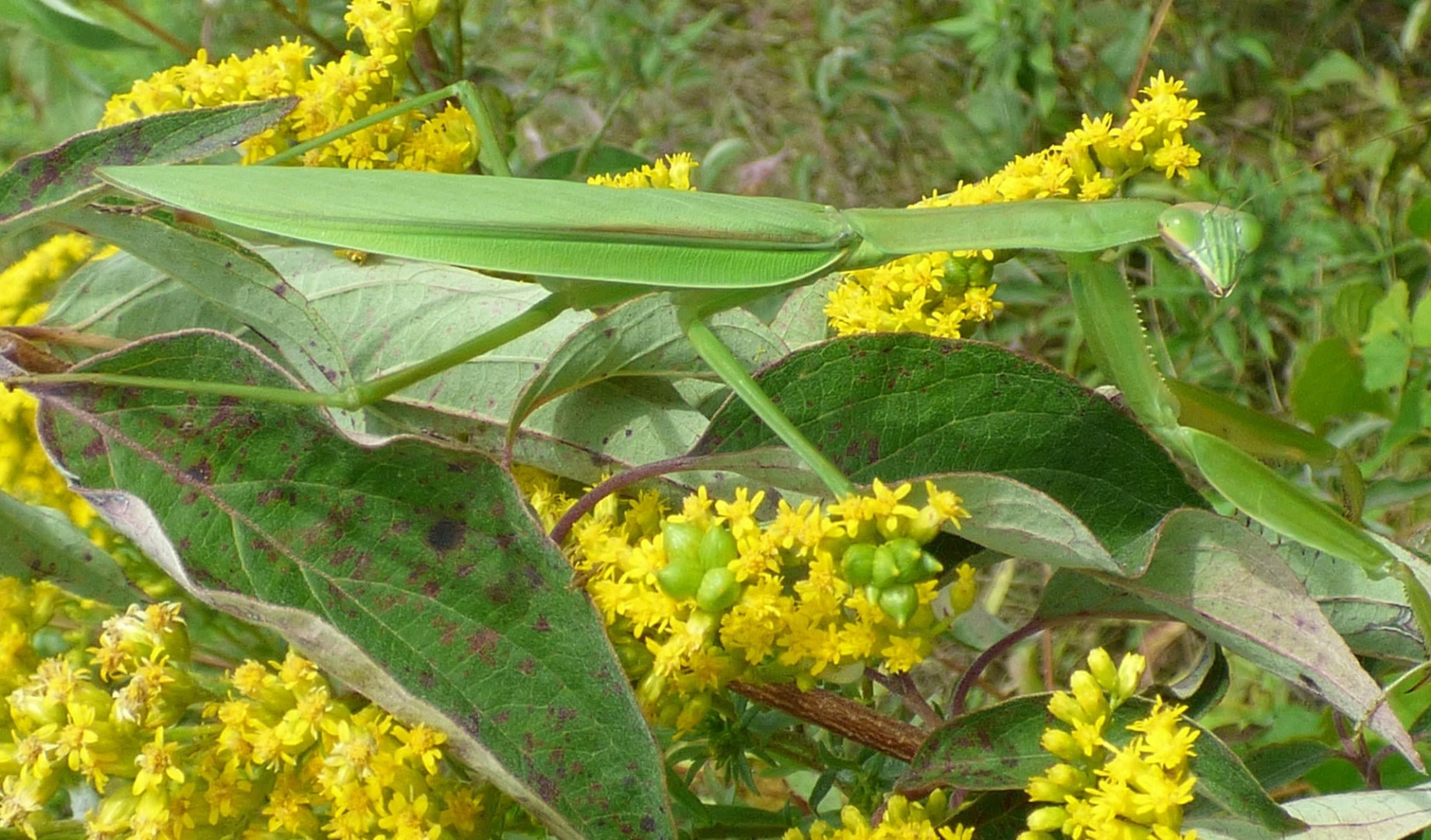
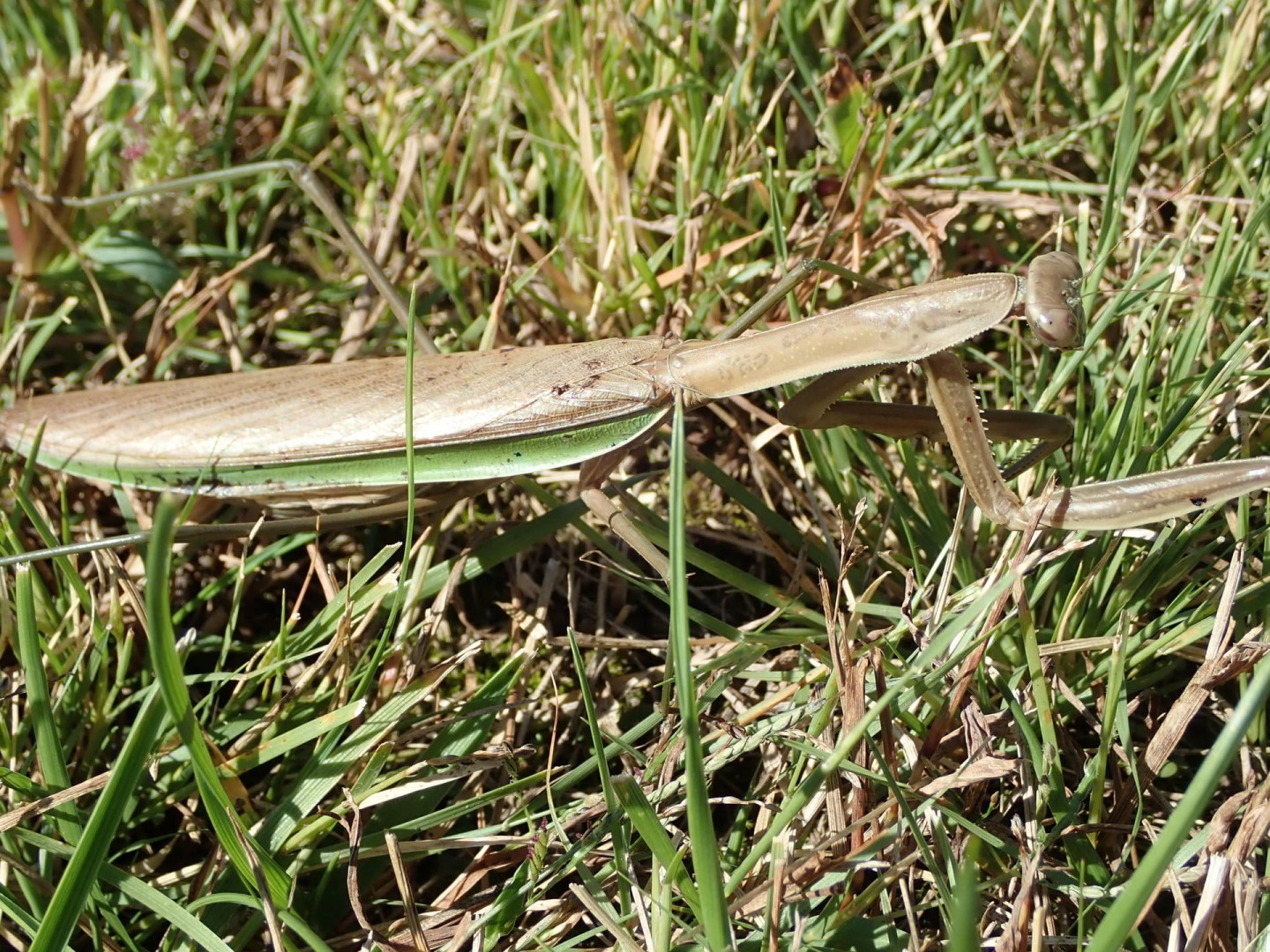
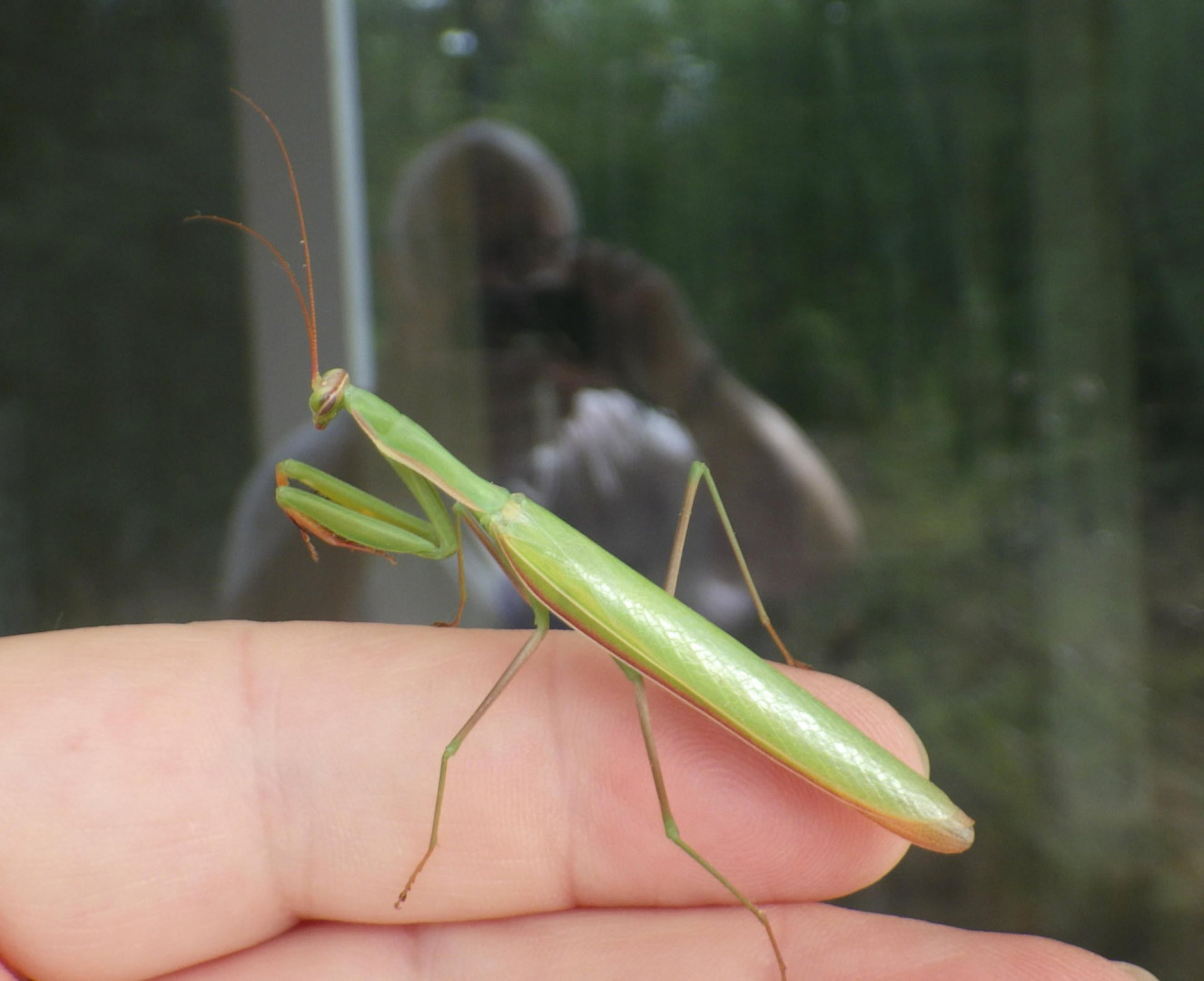
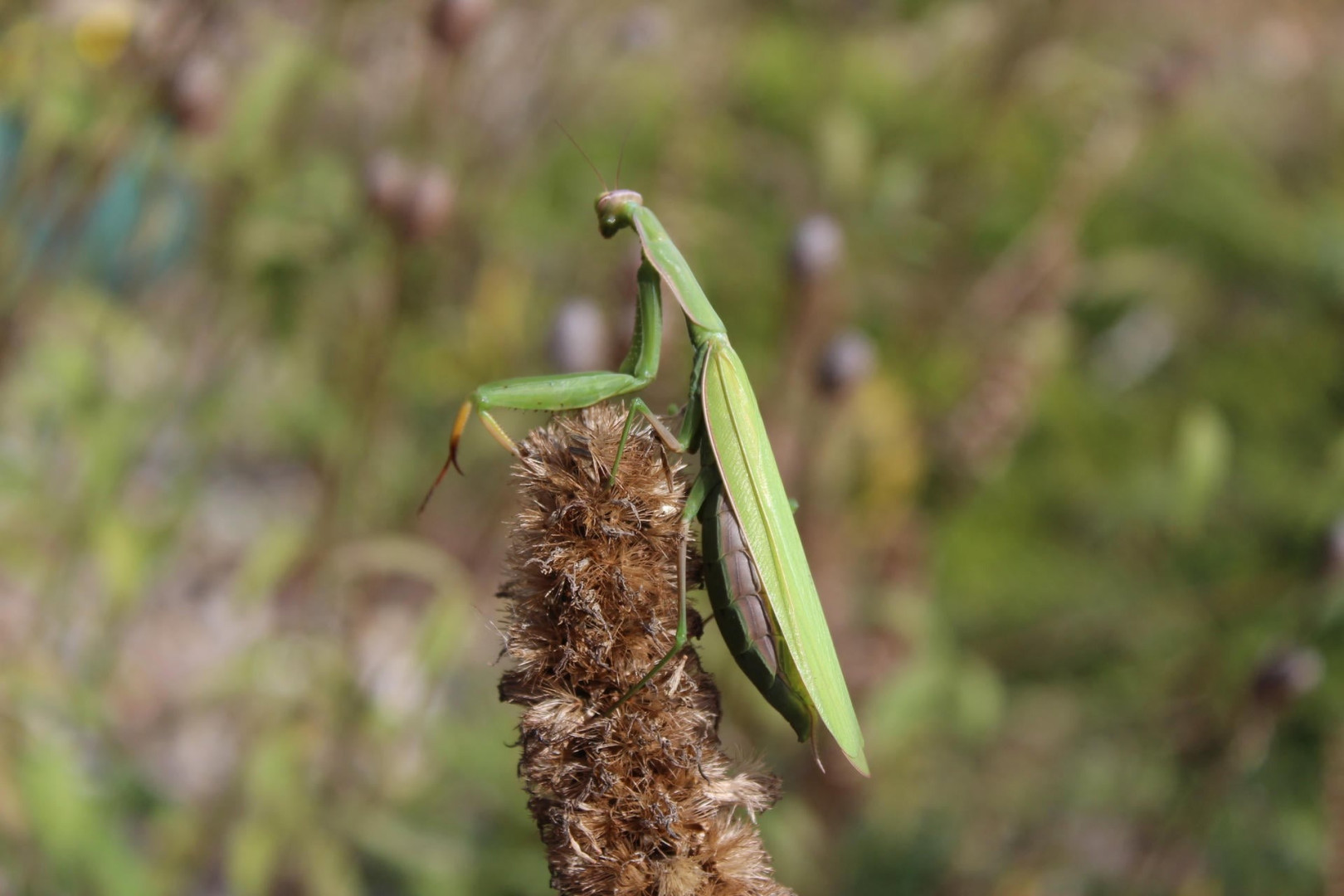
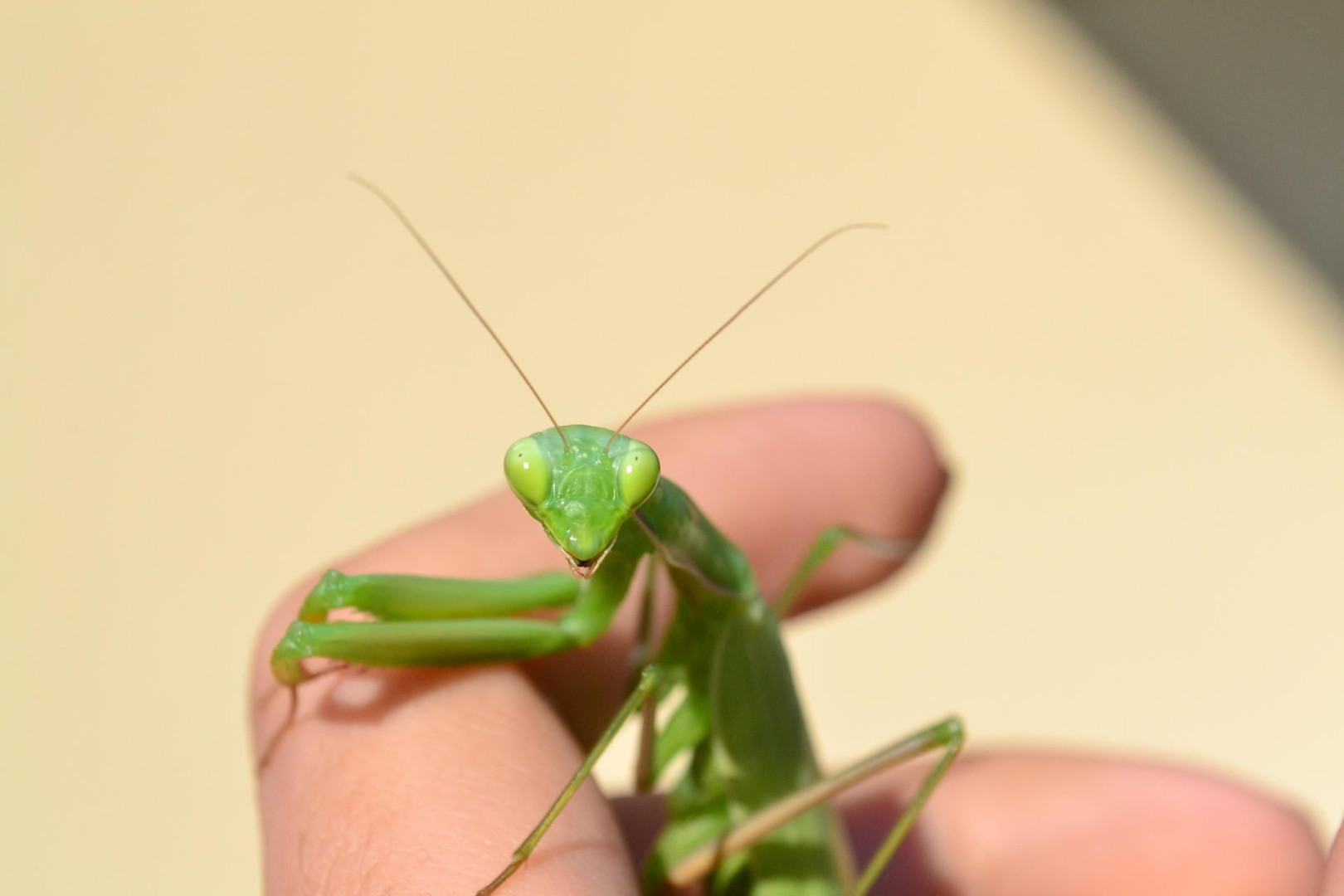
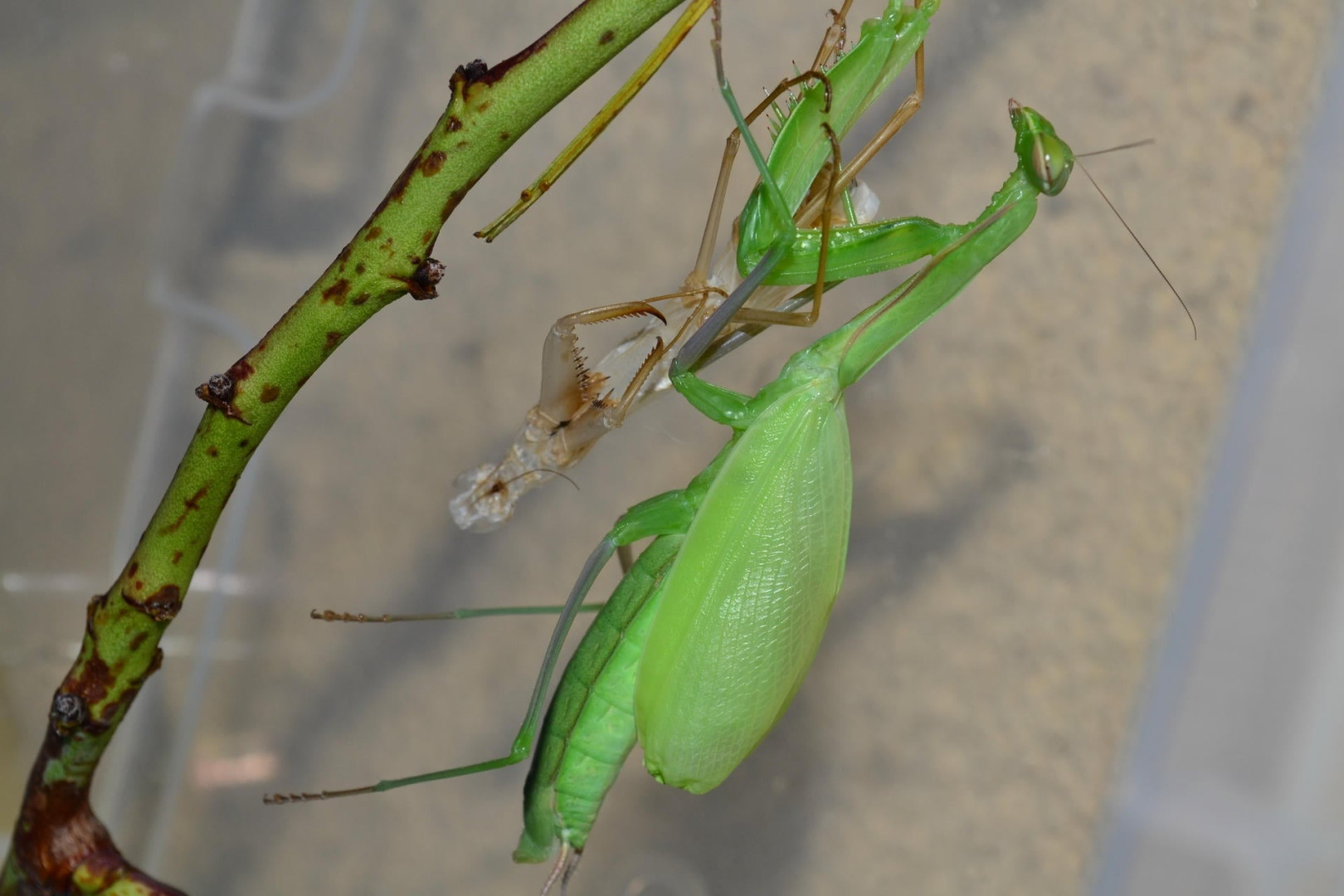
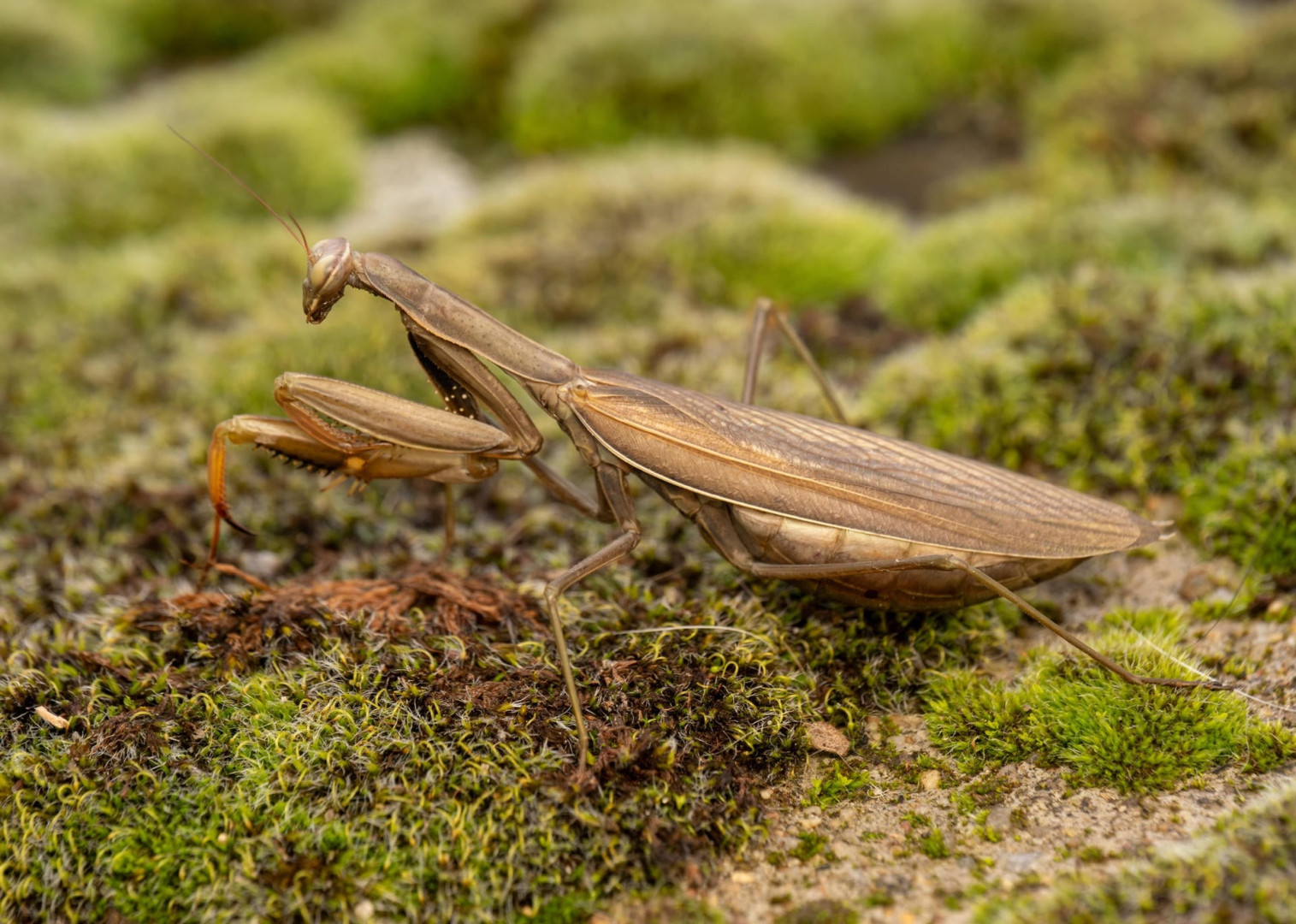
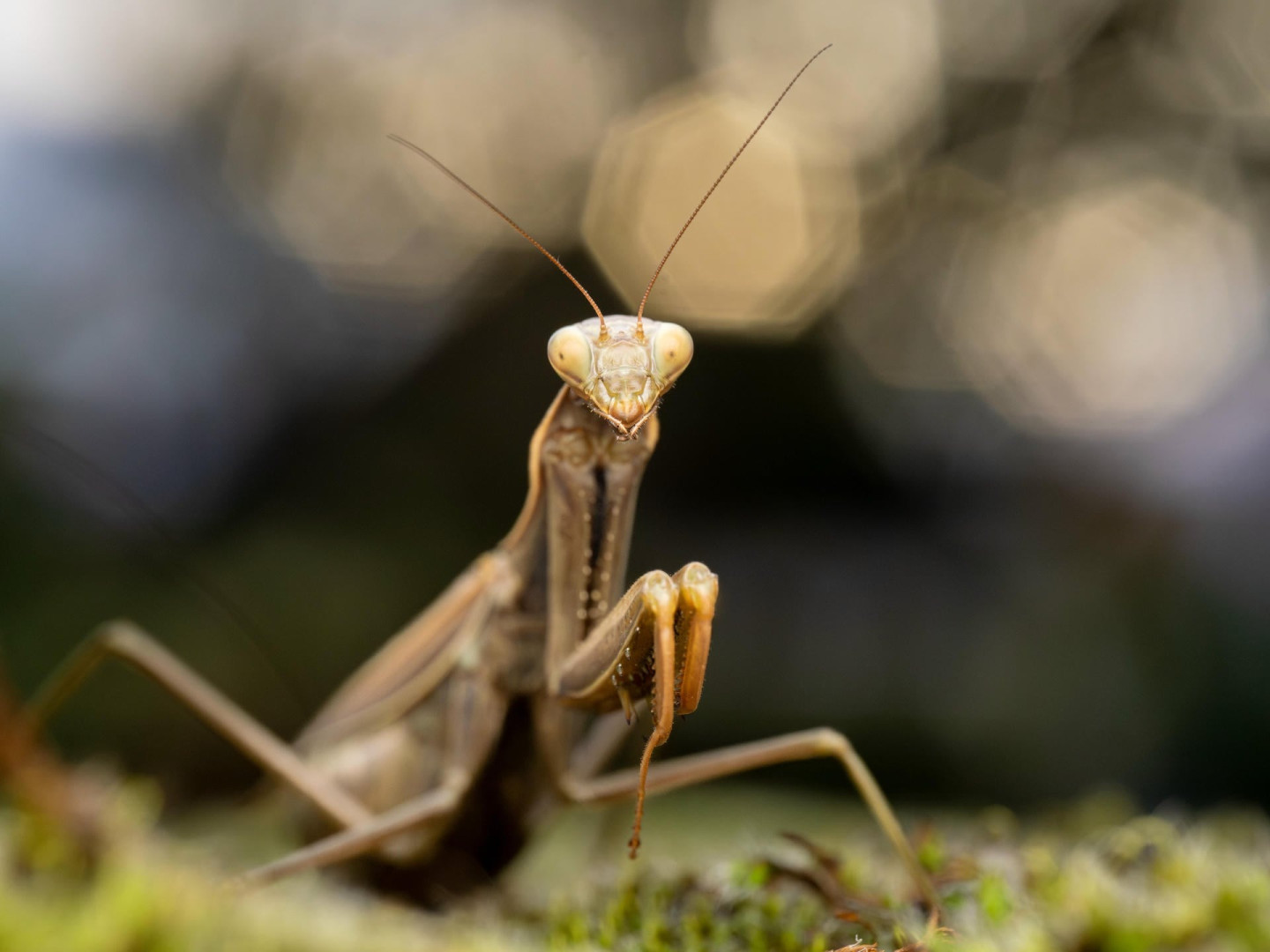
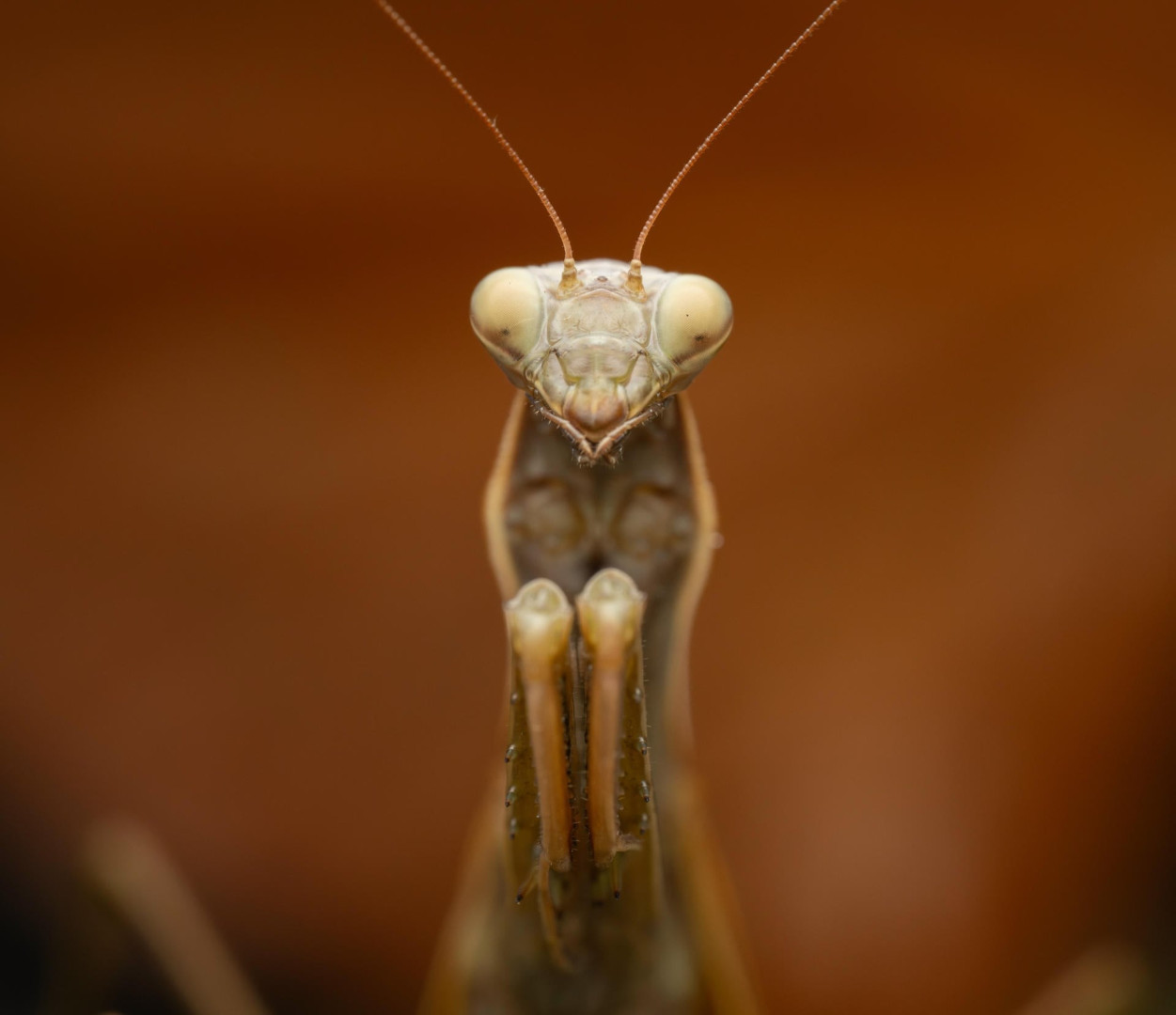
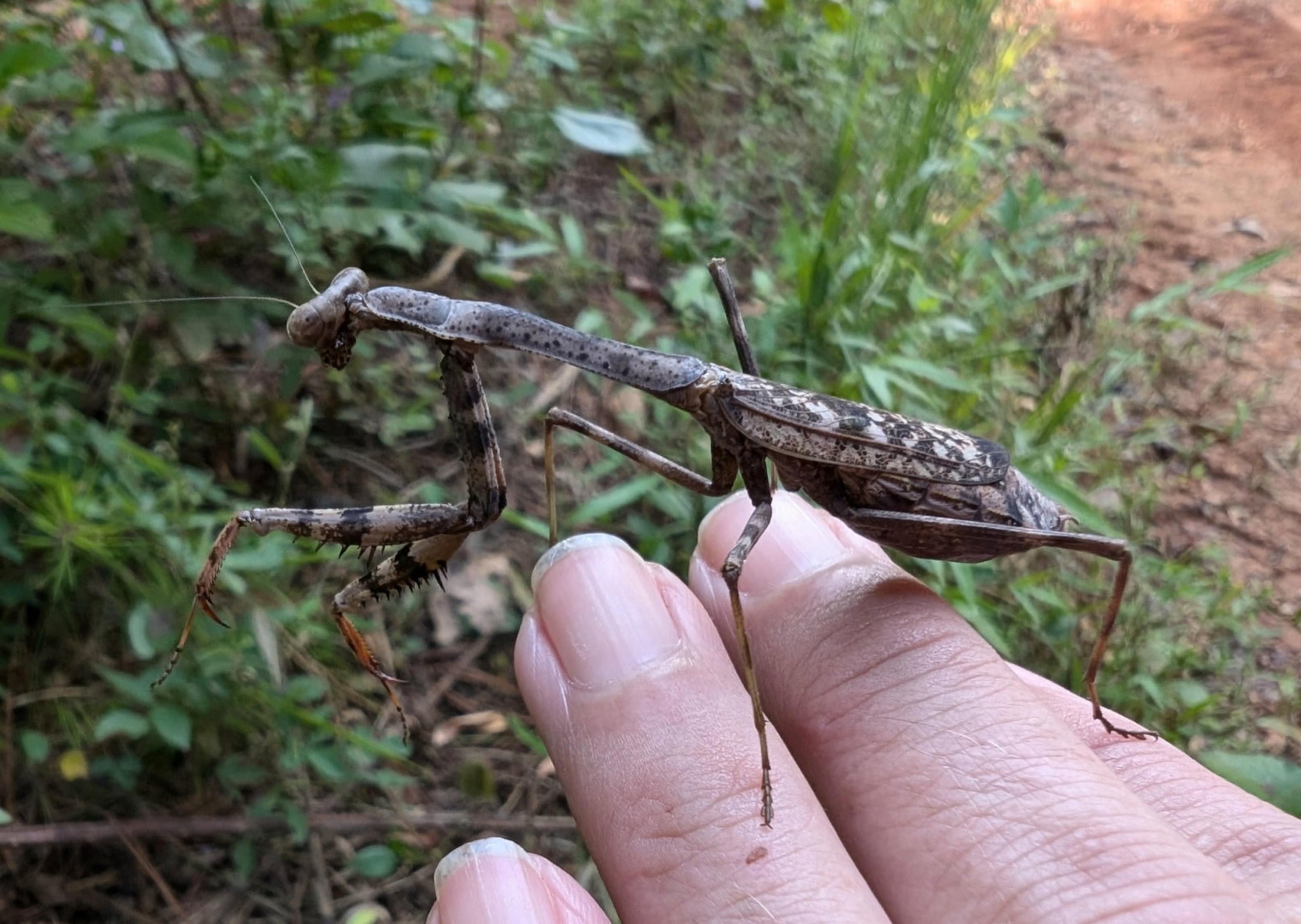
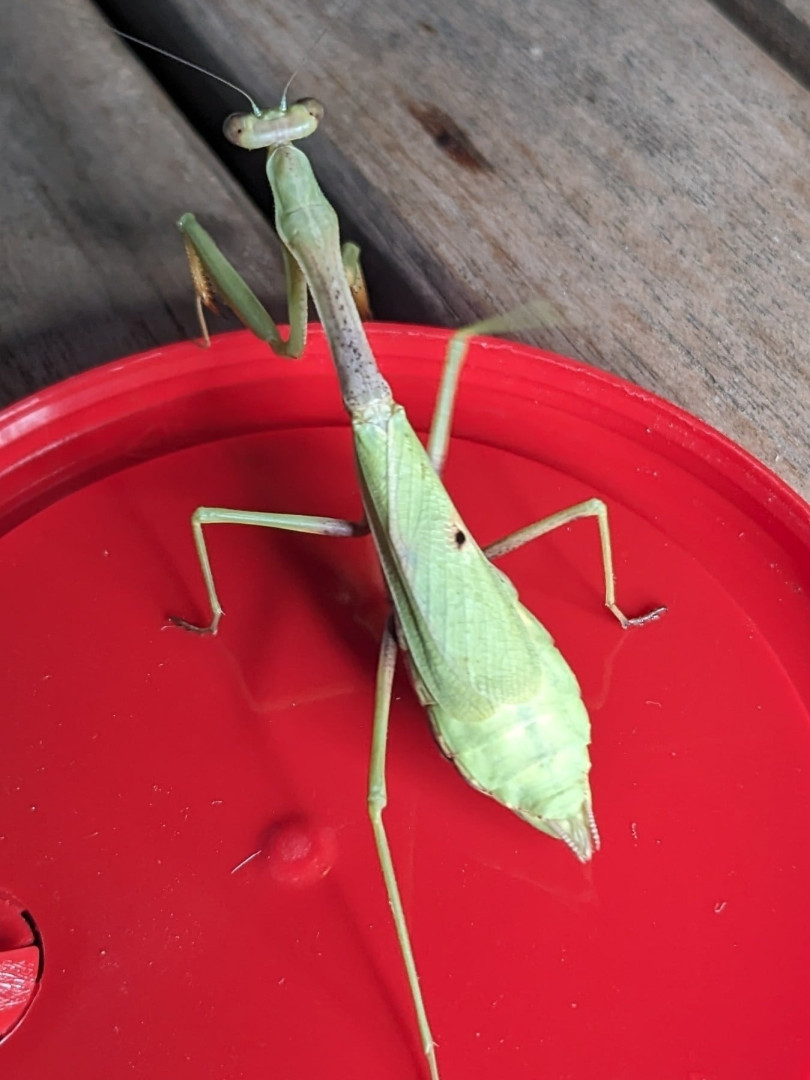
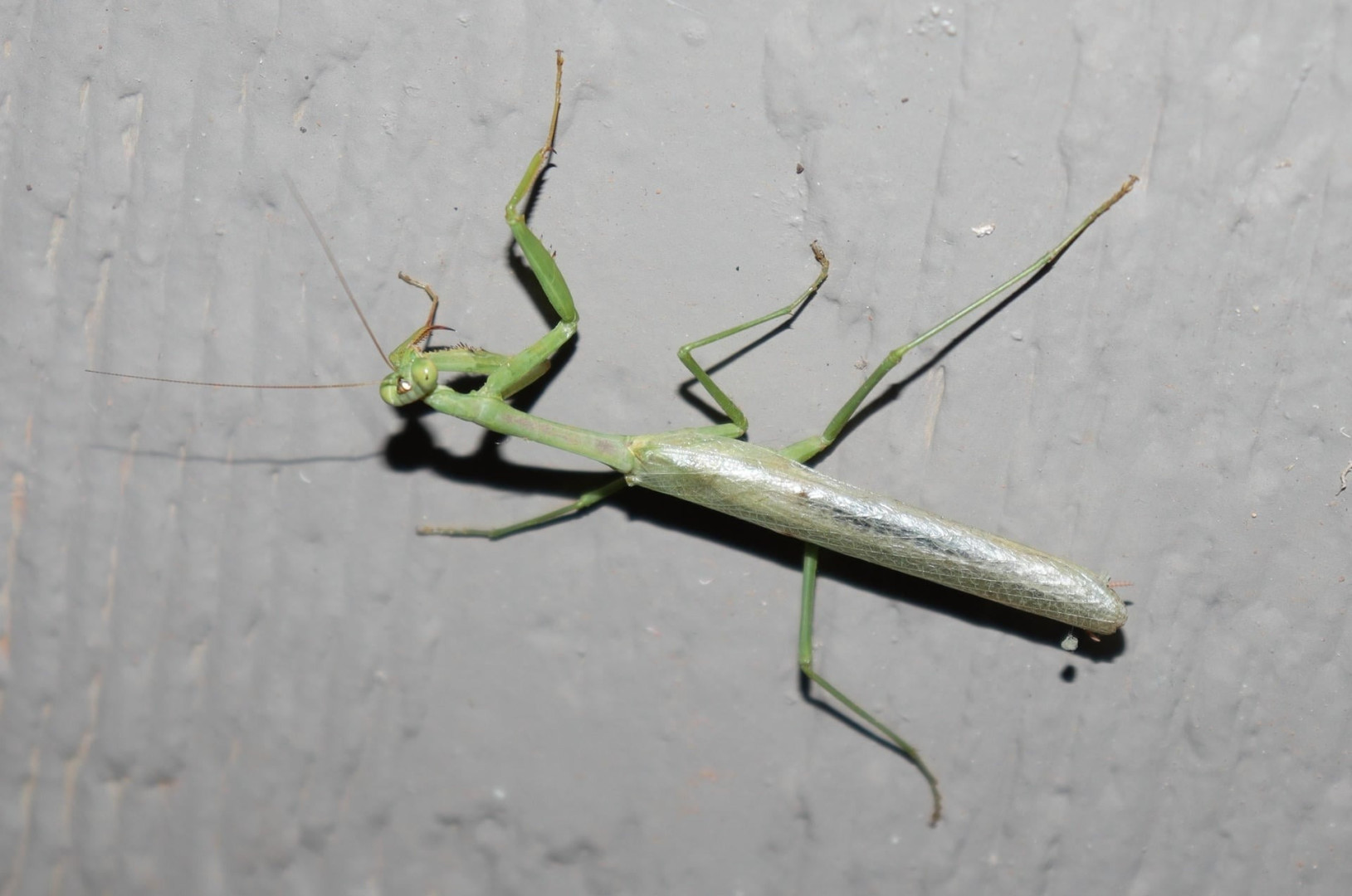
Identifcation





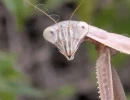
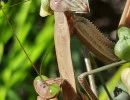
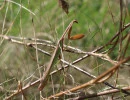
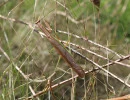
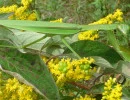
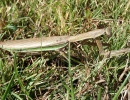
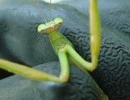
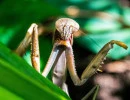


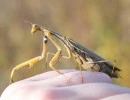
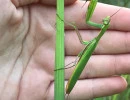
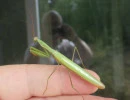
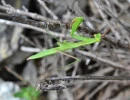
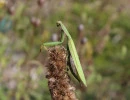
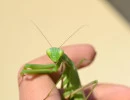
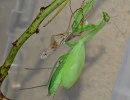
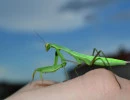
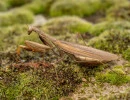
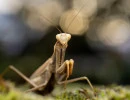
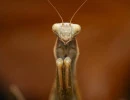


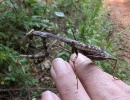
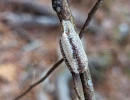
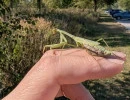
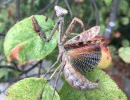
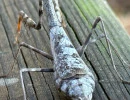
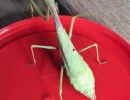
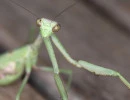
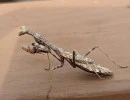
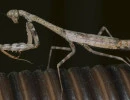
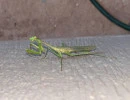
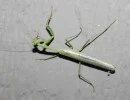
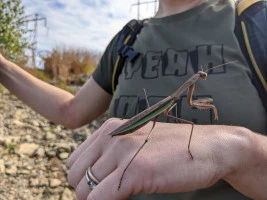
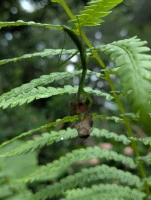
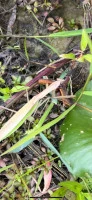
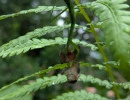
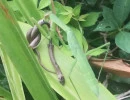
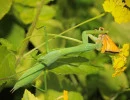
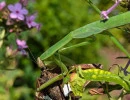
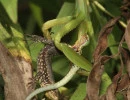
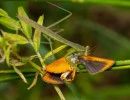
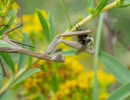
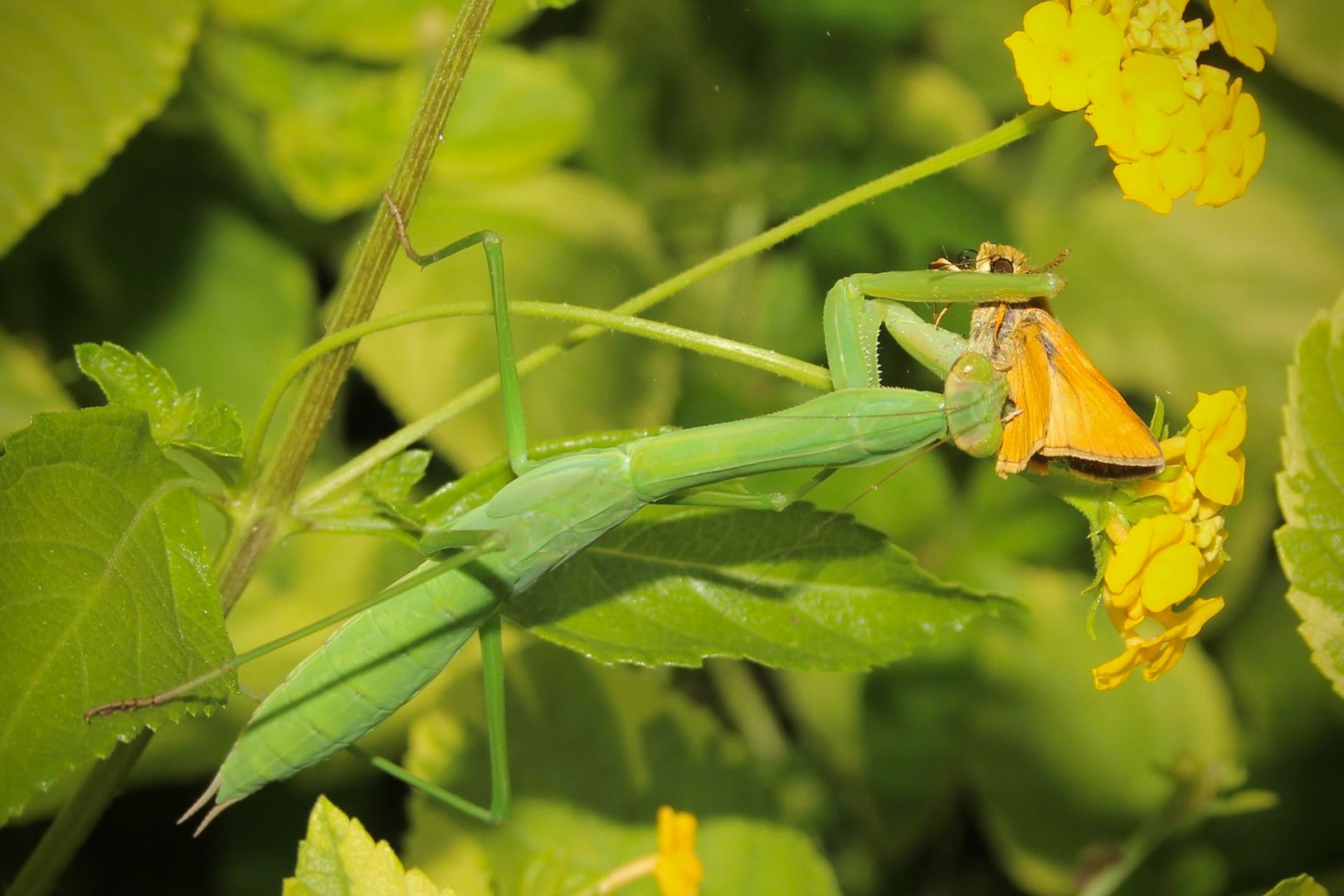
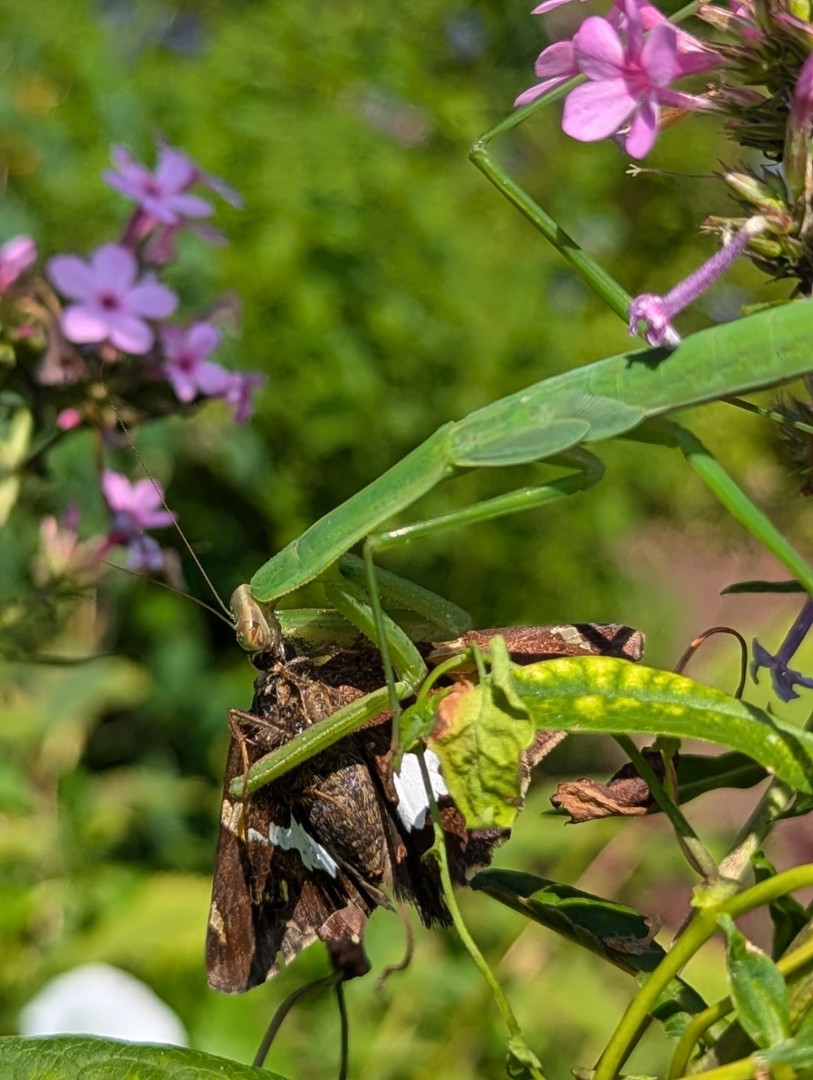
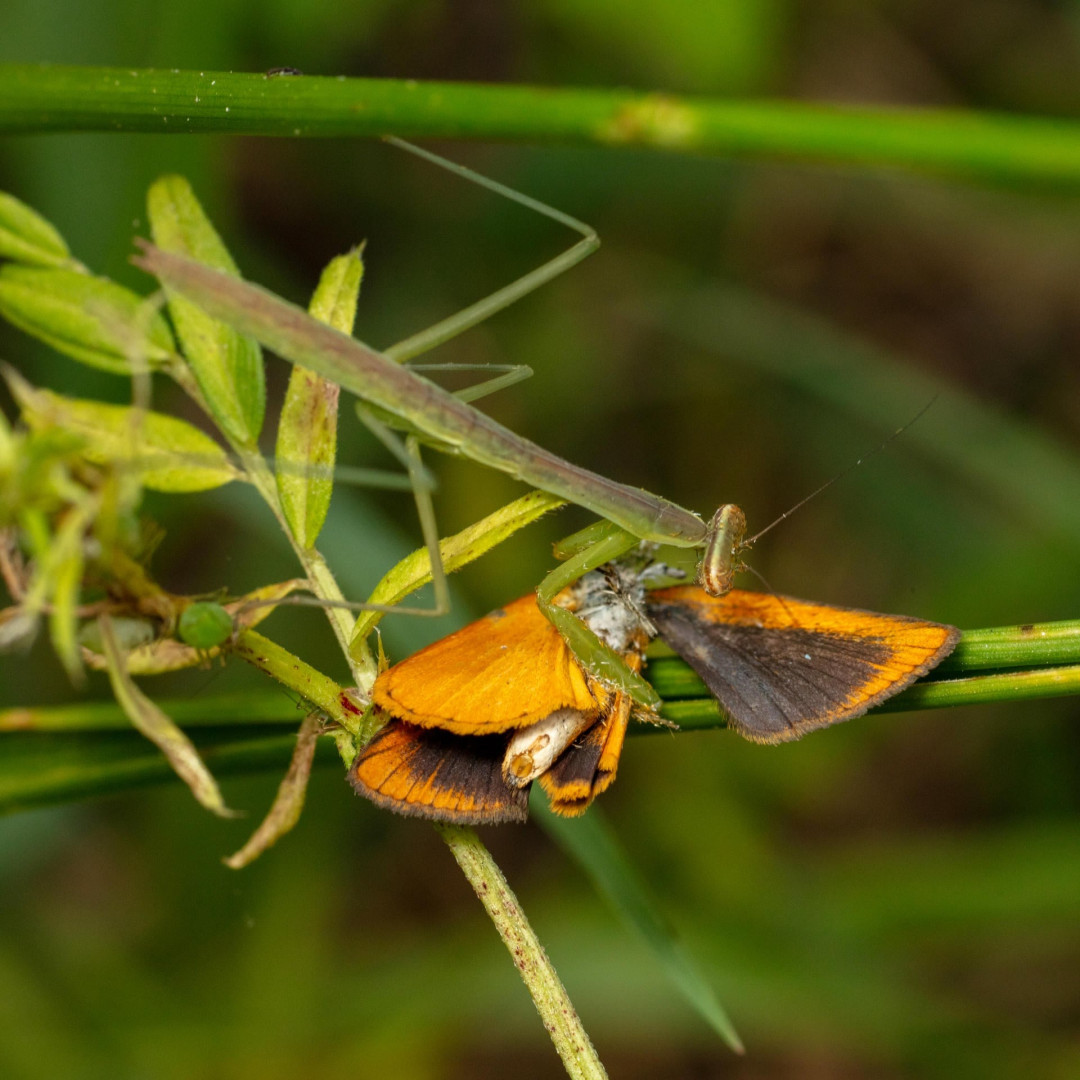
Chinese Mantis (Tenodera sinensis) Prey




















Final conclusion and call to action
The science shows that the Chinese mantid and European mantid meet the harm-based definition of invasive when we look at their diet, densities, and interactions with native fauna. Admiration for their beauty has delayed recognition, and the lag phase has hidden their rise. The practical steps are simple: stop releasing egg cases, remove non-native egg cases from pollinator gardens when encountered, improve identification skills so native mantids can be recognized and valued, and share research-based information with local groups and agencies.
Frequently Asked Questions
Are these mantids really invasive? They have been here for over 100 years.
Yes, by the standard harm-based federal definition. The length of residency does not determine invasive status. What matters is whether the species causes or is likely to cause economic or environmental harm. The Chinese and European mantids do both. They consume pollinators, prey on federally threatened and endangered insects, compete with and directly consume the native Carolina mantid, and suppress native predator activity. Many of the most damaging invasive species, including common buckthorn and multiflora rose, were present for 50 to 100 years before their impacts were widely recognized.
Should I release egg cases I find at the garden center?
No. Commercially sold egg cases in North America are almost always Chinese mantid (Tenodera sinensis). Releasing them adds to an already-established population of a non-native generalist predator in your local habitat. These mantids will consume whatever prey is most available at flowering plants in late summer and fall, which means bees, butterflies, and other pollinators are frequent victims. University extension sources, including NC State and Utah State, explicitly advise against releasing Chinese mantid egg cases in pollinator plantings and gardens. If you find egg cases on your property, identification is the first step. If they belong to Chinese or European mantids, removing and destroying them is the most straightforward action you can take.
How do I identify native vs. non-native mantids and their egg cases?
There are three mantid species commonly encountered in the eastern United States. The Carolina mantid (Stagmomantis carolina) is the only native one in most of the country.
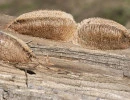
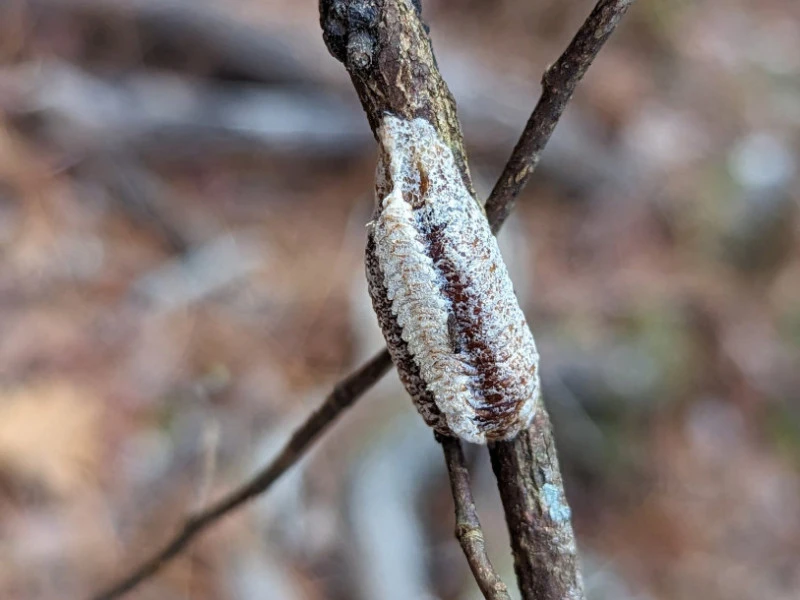
- Carolina mantid: about 2 inches long, mottled gray, brown, or green, rectangular face plate, wings cover only about two-thirds of the abdomen in adults. Egg case is elongated, slender, relatively smooth, with lighter and darker brown stripes.
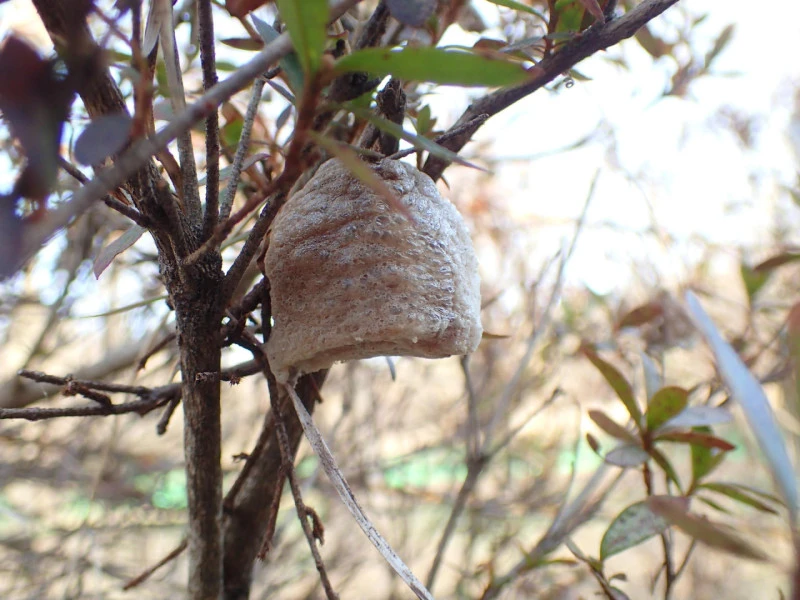
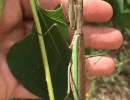
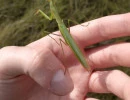
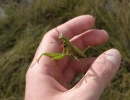
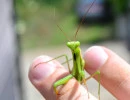
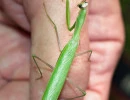
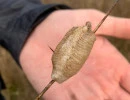
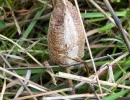
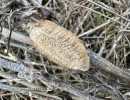
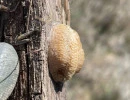
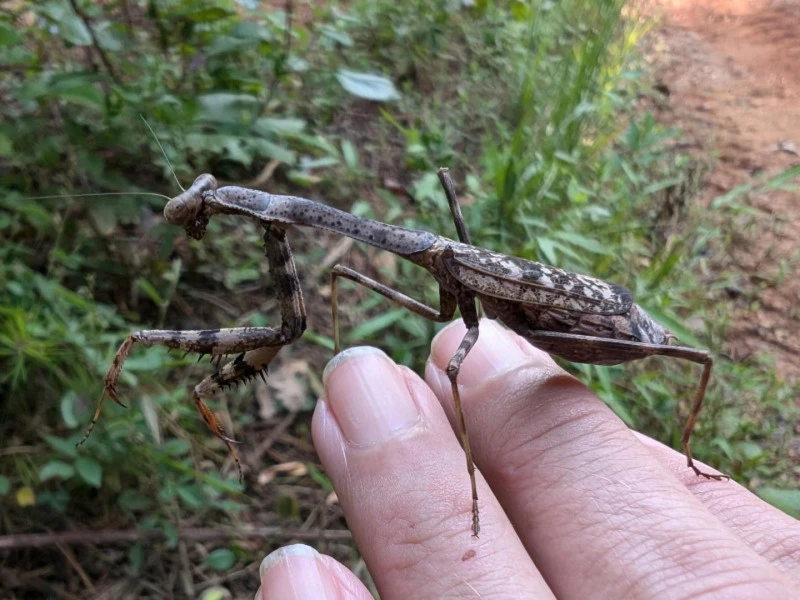
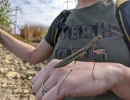
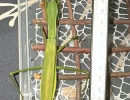
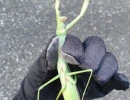
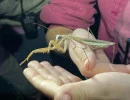
- Chinese mantid (Tenodera sinensis): up to 5 inches long, light green or brown, square face plate, wings extend past the abdomen. Egg case is rounded, ping-pong-ball size, foamy styrofoam texture, uniform straw-brown color.
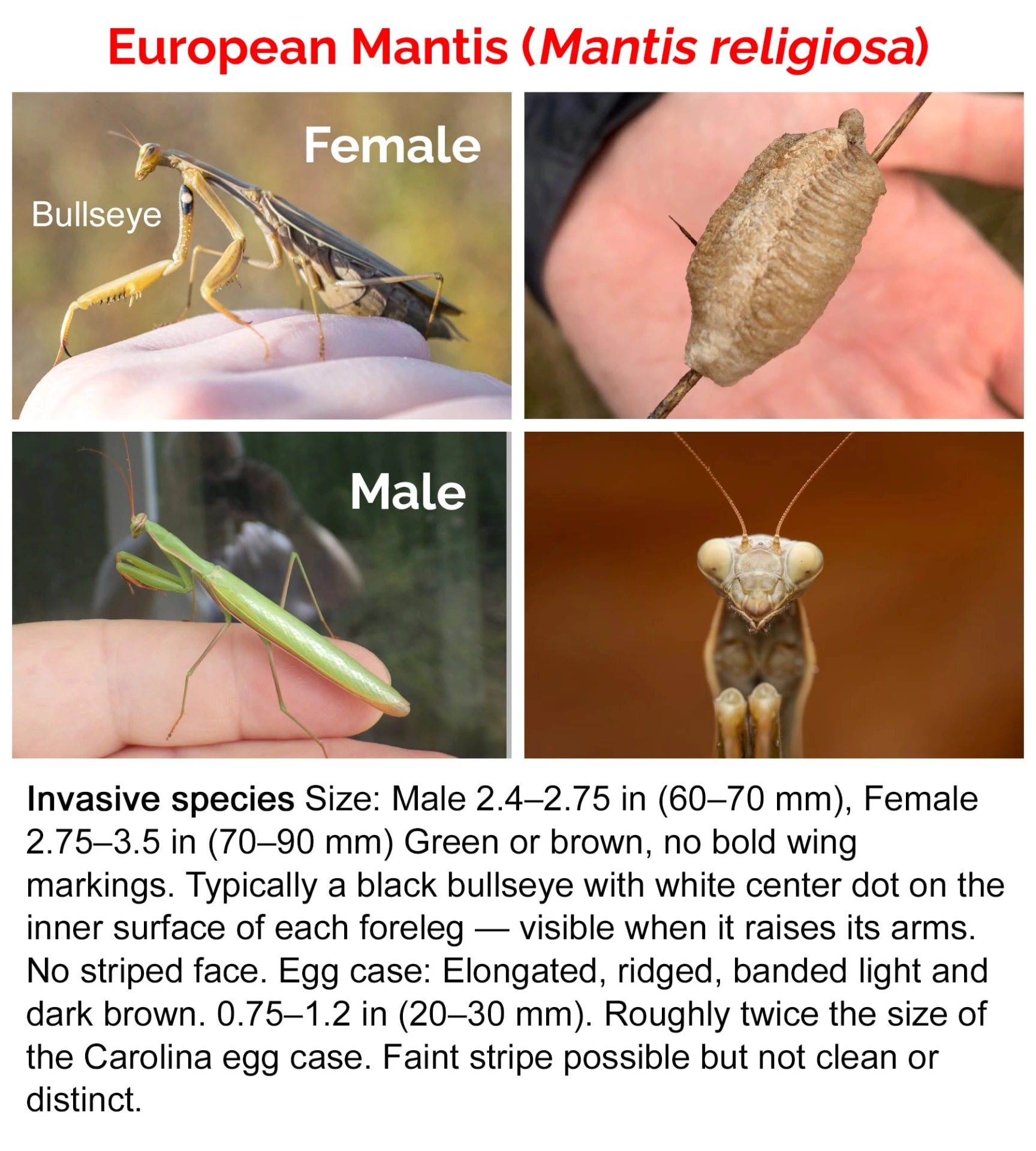
- European mantid (Mantis religiosa): about 3 inches long, green or brown, distinctive black-ringed spot on the inside of each foreleg near the body. Egg case is elongated like the Carolina mantid's but more uniform in color, no striping.
When in doubt, photograph the egg case and post it to iNaturalist. The community can confirm identification quickly, and your observation helps track the spread of non-native species.
Are they effective for pest control?
No. This is the core myth that drives their commercial sale, and it does not hold up to scrutiny. University extension programs including NC State, Utah State, and others all conclude that Chinese mantids have little to no value as biocontrol agents. Mantids are generalist ambush predators. They do not target pest species. They eat whatever lands near them, and in late-summer gardens that is most often a pollinator. They cannot reduce mobile, fast-moving pest populations like aphids. They also consume other predators, including wasps and beetles that actually do provide meaningful pest suppression. When you release a mantid to control pests, you are more likely to reduce your pollinator population than your pest population. Specialized biological controls, such as parasitoid wasps and predatory beetles, are far more effective precisely because they do target specific pests.
What can I do to help?
- Stop releasing egg cases. Do not purchase or distribute Chinese or European mantid egg cases.
- Remove non-native egg cases when you find them. In winter and early spring before hatch, look for the round, foamy Chinese mantid oothecae and destroy them. Crush them, cut them open and submerge in water, or feed them to chickens. Do not relocate them, that just moves the problem.
- Learn to identify the Carolina mantid and its egg case so you can protect the native while removing the non-native.
- Share this information with local native plant groups, master gardener programs, and anyone who recommends purchasing mantid egg cases for the garden.
- Post observations to iNaturalist. Documenting all mantid species, native and non-native, helps researchers track population trends and range changes.
- Support pollinator habitat by planting diverse native plants and reducing pesticide use.
References and Study Summaries
Policy and Definitions
Executive Order 13112. Invasive Species. 1999. Federal Register 64 FR 6183.
Defines invasive as a non-native organism whose introduction does or is likely to cause economic or environmental harm or harm to human health. Establishes the National Invasive Species Council and federal management planning.
federalregister.gov
Executive Order 13751. Safeguarding the Nation from the Impacts of Invasive Species. 2016. Federal Register.
Amends EO 13112 to strengthen prevention and control and to protect biodiversity and resilience. Provides current federal framing for invasive species impacts and responsibilities.
federalregister.gov
USDA NRCS. Terminology and Definitions Associated with Revegetation. Technical Note 9. 2005.
Defines naturalized as not native and of foreign origin but reproducing without human fostering. Distinguishes naturalized from invasive, which is harm-based. The neutral use of naturalized is why it does not excuse ecological cost.
nrcs.usda.gov
Population, Density, and Long-term Trends
Christensen T, Brown WD. 2018. Population Structure, Movement Patterns, and Frequency of Multiple Matings in Tenodera sinensis. Environmental Entomology 47(3): 676-683.
Mark-recapture work documented adult densities of 10 to 39 individuals per 1,000 m², with local populations reaching 89 to 161 adults at field sites. The authors also found limited dispersal and frequent multiple matings, suggesting that once established, local populations can persist with little immigration and exert sustained predation pressure.
PubMed
Hurd LE. 2020. Climate Change, Succession, and Reproductive Success of a Praying Mantid Species. Annals of the Entomological Society of America 113(3): 202-211.
A 20-year field series linking climate and vegetation change with reproductive outcomes in Tenodera sinensis. Results indicate that warming conditions and habitat succession may favor population growth, implying that the current footprint of this species could expand as climate conditions shift.
Entomology Today summary
Diet, Prey Breadth, and Predation on Pollinators and Vertebrates
Wilson-Rankin EE, et al. 2023. Diets of Two Non-Native Praying Mantids Show Consumption of Arthropods Across All Ecological Roles. Food Webs 35: e00280.
DNA metabarcoding of gut contents from T. sinensis and M. religiosa collected in United States old fields revealed prey from more than 22 arthropod orders. The prey included pollinators, predators, and herbivores, demonstrating broad non-selective feeding that erodes both pollination services and natural pest control simultaneously.
Dryad dataset
Nyffeler M, Maxwell MR, Remsen JV Jr. 2017. Bird Predation by Praying Mantises: A Global Perspective. The Wilson Journal of Ornithology 129(2): 331-344.
A synthesis of 147 verified cases showing that large mantids, especially non-native Tenodera sinensis and Mantis religiosa, frequently kill small birds in North America. Hummingbirds are recurring victims at nectar sources and garden feeders, confirming that predation by these introduced mantids can extend to vertebrates and remove high-value pollinators.
BioOne
Kolnegari M, et al. 2022. Opportunistic Depredation of Songbird Nestlings by Female Praying Mantises. PLOS ONE.
Documents vertebrate prey events extending beyond insects and hummingbirds to include songbird nestlings. Broadens the known prey spectrum and reinforces the characterization of Chinese mantids as apex insect predators with vertebrate predation capacity.
PubMed
Wheaton College Academic Festival. 2022. Abundance, Morphometrics, and Diet Diversity of Invasive Praying Mantises in Southeastern Massachusetts.
DNA barcoding analyses identified more than 270 prey taxa in the diets of T. sinensis and M. religiosa. The prey spectrum spans bees, wasps, flies, beetles, butterflies, and other beneficial insects, providing an independent line of evidence that introduced mantids remove many functional groups in pollinator-rich habitats.
Wheaton College
Bray AS, Nieh JC. 2014. Non-Consumptive Predator Effects Shape Honey Bee Foraging and Recruitment Dancing. PLOS ONE.
Experiments with live Chinese mantids placed near feeders showed that honey bees sharply reduced recruitment dances and foraging effort even without direct attacks. These fear effects indicate that mantids can depress pollination services by changing bee behavior, not only by consuming bees. The ecological cost therefore extends beyond actual prey killed.
PLOS ONE
Native Species Impacts
Snyder WE, Evans EW. 2006. Ecological Effects of Invasive Arthropod Generalist Predators. Annual Review of Ecology, Evolution, and Systematics 37: 95-122.
A foundational synthesis covering the mechanisms by which introduced generalist arthropod predators, including mantids, affect native communities. Documents how introduced generalist predators can reach densities far exceeding their native counterparts when released from natural enemies, and how prey species in the introduced range often lack evolved defenses, leading to population declines with cascading food web effects.
Annual Reviews
Wilder SM, Rypstra AL. 2004. Chemical Cues from an Introduced Predator Reduce the Movement and Foraging of a Native Wolf Spider. Environmental Entomology 33: 1032-1036.
Native wolf spiders reduced movement and foraging when exposed to chemical cues from Tenodera sinensis. This mechanistic result shows how the introduced mantid can suppress native predator activity and indirectly weaken natural pest control in North American systems. The effect operates entirely without direct predation.
Oxford Academic
Lichtenstein JLL, Costa-Pereira R, Bolnick DI. 2024. Top-Down Effects of Intraspecific Predator Behavioral Variation on Arthropod Prey Communities. Oecologia.
Field manipulations in Pennsylvania old fields showed that Tenodera sinensis reduces prey biomass in structurally complex vegetation and that behavioral variation among mantids shapes community outcomes. The paper characterizes T. sinensis as widespread, invasive, and non-selective, and provides contemporary experimental evidence of strong top-down effects in United States habitats.
PDF
Fea MP, et al. 2018. Behavioral Variation Post-Invasion: Resemblance in Some, But Not All, Behavioral Patterns Among Invasive and Native Praying Mantids. Animal Behaviour.
Using the invasive European mantid and the native bordered mantid in California, this study found that invasive mantids showed low individual variation in voracity compared to the native, suggesting stronger selection pressure for consistent high feeding rates in the invasion context. Highlights behavioral mechanisms that may give introduced mantids a competitive edge over native species sharing the same habitat.
PMC
Food Web Effects and Trophic Cascades
Moran MD, Rooney TP, Hurd LE. 1996. Top-Down Cascade from a Bitrophic Predator in an Old Field Community. Ecology 77: 2219-2227.
Adding Chinese mantids to experimental plots reduced herbivore loads and increased plant biomass, demonstrating that this introduced predator can drive trophic cascades in realistic eastern United States old-field communities.
JSTOR
Moran MD, Hurd LE. 1998. A Trophic Cascade in a Diverse Arthropod Community Caused by a Generalist Arthropod Predator. Oecologia 113: 126-132.
Follow-up experiments again detected cascading effects produced by T. sinensis, reinforcing that community restructuring is not a one-off result and can occur in more complex assemblages.
PubMed
Fagan WF, Moran MD, Rango JJ, Hurd LE. 2002. Community Effects of Praying Mantids: A Meta-Analysis of the Influences of Species Identity and Experimental Design. Ecological Entomology 27: 385-395.
A synthesis of field experiments showed consistent guild-level changes caused by mantids, including declines in Diptera, Hemiptera, and other groups. The results support predictable community disruption rather than selective removal of crop pests.
Wiley
Spread, Invasion, and Niche Shifts
Maxwell MR, Eitan S. 1998. Range Expansion of an Introduced Mantid and Niche Overlap with a Native Mantid. Annals of the Entomological Society of America 91: 422-429.
Documents the spread of the Mediterranean mantis across the United States Southwest and shows niche overlap with the native bordered mantid, indicating potential for competition and continued expansion.
doi.org
Nisip C, Svenson G, Fridie J, Lucky A. 2019. A Newly Established Non-Native Praying Mantis Species, Liturgusa maya, in Florida, USA, and a Key to Florida Mantis Genera. Florida Entomologist 102: 147-153.
Documents the first established United States population of Liturgusa maya, provides an identification key for Florida mantis genera, and highlights invasion risk from additional introduced mantids. The pattern of detection long after establishment is consistent with the lag-phase model described for Chinese and European mantids.
BioOne
De Vivo M. 2024. Analysis of Potential Niche Shifts in Alien Pairs of Mantis Species with Comments on Current Knowledge. Journal of Orthoptera Research 33(2): 217-227.
Climatic niche models comparing native and invaded ranges show niche expansion and niche unfilling for alien mantids, including Tenodera and Mantis, consistent with adaptation and ongoing spread in North America. The results suggest these species have not yet reached the limits of their potential range in their introduced regions.
Journal of Orthoptera Research
Extension, Agency, and Conservation Sources
Utah State University Extension. Beneficial Insects: Mantids.
Summarizes research indicating that mantids are indiscriminate generalist predators that consume pests, pollinators, and natural enemies. Concludes that mantids have little value as biological control agents and should not be promoted for pest management.
USU Extension
NC State University, Growing Small Farms. Chinese Mantids.
Documents verified hummingbird predation and risks to pollinators and advises against using or releasing Chinese mantids in pollinator plantings. One of the clearest extension-level statements against the garden-helper myth.
NC State Extension
Praying Mantids - Piedmont Master Gardeners
A management-oriented case study explaining how staff identified and removed non-native oothecae to reduce predation pressure on pollinators in urban habitat plantings. A practical model for pollinator garden management.
Virginia Cooperative Extension
Brandywine Conservancy. The Invasive Mantis Species.
Lists Chinese and European mantids as invasive species of concern in the Mid-Atlantic region. Recommends removing non-native mantid egg cases and discourages their release to protect native insect communities, including the Carolina mantid.
Brandywine Conservancy
NC State University Extension, Biological Control Information Center. Chinese Mantid.
Describes non-native status and limited value for targeted biocontrol. Notes that mantids consume pest and non-pest species without selectivity.
NC State Extension