
Embracing Soft Landings
Native plants, leaf litter, and the ground beneath your keystone tree
Keystone Trees for Lepidoptera Conservation
A soft landing is a combination of appropriate native plants under a tree or shrub, along with the leaf litter, duff, and soil conditions beneath them that moths and butterflies need to complete their life cycles. The concept was developed by Leslie Pilgrim of Neighborhood Greening and pollinator conservationist Heather Holm. Getting it right means thinking about the whole system, from the plants above to the ground beneath them.
Lepidoptera, our moths and butterflies, are not just beautiful. They are the engine that keeps terrestrial food webs running. Ninety-six percent of bird species require caterpillars to raise their young.1 When caterpillar populations collapse, birds follow, and everything above them on the food chain unravels. Understanding what caterpillars actually need, at every stage of their lives, is where soft landings begin.

Photo by: Martha Hellander

Photo by: Dave Neu
Lepidoptera, commonly known as butterflies and moths, play a significant role in various ecosystems as a food source for birds and other wildlife. Here's how they contribute to the food web:
- Primary Consumers: Lepidoptera larvae (caterpillars) primarily feed on native plant matter, especially leaves. They are essential herbivores in many ecosystems, consuming many native plant species. By doing so, they help regulate plant populations and maintain biodiversity.
- Food Source for Birds: Many bird species rely on Lepidoptera, particularly caterpillars, as a crucial food source, especially during the breeding season when high-protein diets are essential for raising chicks. Birds such as warblers, sparrows, robins, and chickadees are known to feed extensively on caterpillars. For example, studies have shown that chickadees may need to feed their chicks up to 6,000 to 9,000 caterpillars during the nesting season.
- Indirect Impact on Plant Health: While Lepidoptera larvae can defoliate plants and sometimes cause damage, their feeding activities stimulate plant defenses and contribute to nutrient cycling. In some cases, their selective feeding can promote plant diversity by favoring certain plant species.
- Pollination: While butterflies are not as efficient as bees in pollination, they contribute to the process, particularly for flowers adapted to butterfly pollination. Butterflies are attracted to nectar-producing flowers and inadvertently transfer pollen as they feed.
- Indicator Species: The presence and abundance of certain Lepidoptera species can serve as indicators of ecosystem health. Changes in their populations can reflect shifts in habitat quality, climate change effects, or the impact of pesticides and other pollutants.
- Support for Other Wildlife: Lepidoptera larvae and adults feed many other wildlife besides birds, including bats, amphibians, reptiles, and even some mammals. In this way, they contribute to ecosystems' overall biodiversity and functioning.
In summary, Lepidoptera are integral components of food webs in many ecosystems, serving as primary consumers, food sources for numerous animals, contributors to plant health, and indicators of ecosystem dynamics. Their presence and abundance are essential for maintaining the balance and health of these ecosystems. Planting native plants and reducing the use of pesticides is critical to keeping a healthy ecosystem.
The moment that started it
Leslie Pilgrim, founder of Neighborhood Greening in Minneapolis, was in the audience when entomologist Doug Tallamy showed a photo of a magnificent oak surrounded by a perfectly mowed lawn. “Poor oak tree,” Tallamy said. “It will never be able to fulfill its true function as a keystone species.”2
That image stuck. Pilgrim teamed up with pollinator conservationist and author Heather Holm to develop what they named soft landings: a system of diverse native plantings under keystone trees that also preserves the leaf litter and duff that insects need to complete their life cycles.3 The concept is deceptively simple, but the biology behind it runs deep.
What nobody mentions about the ground
Caterpillars that pupate on or near the ground make their way down from the canopy in different ways, some dropping, some crawling, some rappelling on silk. Others burrow into the soil to pupate underground. Either way, they need loose, undisturbed, organically rich ground to survive that transition. Compacted soil under a mowed lawn is a dead end, and landscape fabric is equally disqualifying: it blocks caterpillars from reaching the soil entirely.4
The research on this is peer-reviewed and the numbers are hard to ignore. A 2025 study by Ferlauto and Burghardt, published in Science of the Total Environment, found that raking leaves from residential yards reduced Lepidoptera abundance by 45 percent and species richness by 40 percent compared to yards where leaves were left in place.5 Shredding or mulching leaves was just as damaging as removing them entirely: the physical structure of intact leaf litter is what makes it function as habitat, not just its presence.5 Long-term raking also reduced soil organic carbon by up to 24 percent, degrading the substrate that any future habitat depends on.6
This is the part of the soft landings conversation that almost never gets said. Plants matter enormously, but if the ground beneath them is biologically dead, the caterpillars that fed on those plants cannot complete their life cycles. The plants and the substrate are one system.
Plants still matter
None of this works without the right canopy overhead. Research by Tallamy, Shropshire, and Narango, published in Nature Communications in 2020, found that just 14 percent of local plant genera support more than 90 percent of Lepidoptera diversity across the United States.7 Keystones vary depending on your location but these genera consistently stand out: Quercus (oaks), Prunus (cherries and plums), Salix (willows), Acer (maples), Betula (birches), Carya (hickories), and Populus (cottonwoods, aspens, and poplars). The list of native trees and shrubs that host caterpillars is long, and placing leaf litter under any of them is going to be beneficial. You do not need a keystone oak to get started.
They determine how many caterpillars will be dropping into your soft landing in the first place.
The understory layer extends that function further. Many native herbaceous species growing beneath the canopy are host plants in their own right, supporting Lepidoptera that are not dependent on the tree above them at all.8 A well-planted soft landing works at every vertical layer simultaneously.
Plant selection matters more than most people realize. Woodland plants that have evolved pushing up through leaf litter are a natural fit here, and choosing them deliberately makes a difference. Dense mat-forming non-natives can smother the litter layer and eliminate the very habitat you are trying to create. Native sedges like Pennsylvania sedge (Carex pensylvanica) are a strong choice: they thrive in dry shade under trees, spread by rhizomes to fill space gradually, and their clumping growth habit creates structure within the litter layer rather than sealing it off. Spring ephemerals, ferns, and woodland wildflowers work the same way, emerging through the duff without compressing it. The goal is a plant community that complements the litter layer rather than replacing it.
Know your soil before you build your landing
Before doing anything physical, step back and look at what is actually under your tree. Your soil condition determines your timeline, your tools, and how realistic your expectations should be. Someone gardening over loose, loamy soil with earthworms visible at the shovel blade is a season or two away from a functioning soft landing. Someone gardening over hard compacted clay in a subdivision where the topsoil was stripped during construction may be looking at several years and a few deliberate steps. Both situations are worth addressing. The gap between them is wider than most soft landings guides let on.
What the soil is actually doing
A soft landing supports two groups of caterpillars, and knowing a little about both helps you understand what your soil needs.
Lepidoptera use a wide range of pupation strategies. Many species pupate directly on or near the host plant, on bark, in rolled leaves, or in stems and never reach the ground at all. Others make their way down and pupate in the leaf litter itself, tucked between dead leaves or cocooned just above the soil surface. For these species the litter layer is the habitat. What kills them is raking, blowing, shredding, or mowing over it.
Some species do burrow into the mineral soil to pupate, including sphinx moths, giant silk moths like Cecropia and Polyphemus, and many Noctuids. These include some of the largest and most recognizable moths in the Midwest. For these species, loose moist soil is a direct requirement for both entry and emergence, and losing suitable pupation habitat affects their ability to complete their life cycle.
Compacted soil fails burrowing species in two ways at once. It is physically hard to get into and back out of, and because it lacks organic matter it dries out fast. Research has found that soil moisture matters more to pupal survival than soil type alone, with far fewer moths emerging successfully from dry compacted clay than from soils that hold moisture well.10 A caterpillar that manages to burrow in still has to push back out as an adult weeks or months later. That return trip through hard dry soil is likely where many are lost.
Here is where it ties back to the litter-layer species: compacted soil without organic matter dries out faster, and that drying moves up into the leaf litter above it. Litter sitting over bare compacted clay loses moisture and breaks down much faster than litter over healthy soil. The soil and the litter layer above it are connected. What happens below affects what happens above. Improving your soil is not just about giving burrowing caterpillars somewhere to go. It is about keeping the whole system moist and stable enough to work through the seasons.10
Reading your starting point
Dig a small test hole at the edge of your tree's dripline, away from major roots. Soil that crumbles easily, shows earthworms, or has visible fungal threads and dark organic matter is a good sign. You are likely close. Soil that comes out in hard dry clods with no sign of life, even after recent rain, means the soil biology has been depleted and needs rebuilding before the system can work well for either group of caterpillars.
If your soil is already reasonably loose and alive, the straightforward approach works well. Smother the turf with cardboard or newspaper in autumn, cover it with several inches of whole leaves and small branches, and let it sit through winter. By spring you have a plantable bed with a developing duff layer already forming. Arborist wood chips, especially double-ground chips that include leaf and cambium material, work well alongside leaves as a surface mulch. They feed soil fungi and build toward functional duff within a season or two. Bagged bark mulch is a different product and worth skipping: it breaks down slowly and adds little biological value.3
If your soil is compacted and depleted, leaves and chips alone will help, but slowly. The biological community needed to process that organic matter is not there yet. Surface applications of biochar improve water infiltration and give soil microbes somewhere to live without disturbing tree roots. A humic acid drench helps open clay structure from within. Mycorrhizal inoculants, applied to planting holes or watered in, help bring back the fungal networks that years of lawn care removed. None of these are overnight fixes, but each one speeds up the biological recovery that mulch alone is working toward.
If you are planting a new tree rather than working around an established one, you have a real advantage. You can address the soil before the tree goes in, work organic matter and biochar into the planting zone, and start building your litter layer from day one. That early work pays off across the entire life of the planting.
One rule applies no matter where you are starting: no landscape fabric. It suppresses turf but permanently blocks burrowing caterpillars from getting in and out, and it never breaks down into anything useful. Cardboard and newspaper do the same weed suppression job, feed the soil as they decompose, and leave the ground fully accessible within a single season.4
Leading the Way:
Doug Tallamy and Heather Holm are influential figures in the native plant and insect conservation movement. Tallamy emphasizes the importance of using native plants to support native insects, promoting biodiversity and ecological balance. He highlights the crucial role of insects in the ecosystem and argues for landscaping with plants that can sustain them. On the other hand, Holm focuses on the specific plants that support pollinators and insects, providing detailed guidance on creating habitats that benefit local wildlife. Together, their work aims to raise awareness about the significance of native plants and insects in maintaining healthy ecosystems and promoting sustainable conservation practices.

Doug Tallamy is a professor of entomology at the University of Delaware and the author of Bringing Nature Home and Nature's Best Hope. His research on keystone plants, including the landmark 2020 study published in Nature Communications, identified that just 14 percent of local plant genera support more than 90 percent of Lepidoptera diversity across the United States. His Homegrown National Park initiative brings that science to homeowners, making the case that individual yards can meaningfully restore the food webs that sustain birds, insects, and the broader ecosystem.
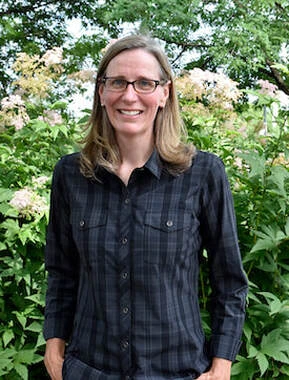
Heather Holm is a pollinator conservationist and the author of multiple award-winning books on native bees and pollinators. Her website pollinatorsnativeplants.com hosts the most comprehensive soft landings guidance available, including regional native plant lists, practical installation advice, and the original soft landings handout she developed with Leslie Pilgrim. Her work bridges the gap between ecological science and what gardeners can actually do in their own landscapes.
Sources
- Tallamy, D.W. Nature's Best Hope. Timber Press, 2020.
- Pilgrim, L., as cited in: "Soft Landings." Charlotte Urban Institute, March 2024. ui.charlotte.edu/story/soft-landings
- Holm, H. and Pilgrim, L. "Soft Landings." pollinatorsnativeplants.com. pollinatorsnativeplants.com/softlandings.html
- Tallamy, D.W. "Make a Home for Wildlife: Pupation Sites." Homegrown National Park. homegrownnationalpark.org
- Ferlauto, M. and Burghardt, K.T. "Removing Autumn Leaves in Residential Yards Reduces the Spring Emergence of Overwintering Insects." Science of the Total Environment 970 (2025): 178821. doi.org/10.1016/j.scitotenv.2025.178821
- Ferlauto, M., Schmitt, L., and Burghardt, K.T. "Legacy Effects of Long-Term Autumn Leaf Litter Removal Slow Decomposition Rates and Reduce Soil Carbon in Suburban Yards." Plants, People, Planet 6(4) (2024): 875–884.
- Narango, D.L., Tallamy, D.W., and Shropshire, K.J. "Few Keystone Plant Genera Support the Majority of Lepidoptera Species." Nature Communications 11 (2020): 5751. doi.org/10.1038/s41467-020-19565-4
- Holm, H., as cited in: "Soft Landings Add Life Under Native Trees." Izel Plants, 2024. izelplants.com/blog/soft-landings
- Holm, H., as cited in: "Grounded and Surrounded." Humane World for Animals. humaneworld.org
- "Moisture and Soil Type Are Primary Drivers of Helicoverpa zea (Lepidoptera: Noctuidae) Pupation." Environmental Entomology 52(5) (2023). pubmed.ncbi.nlm.nih.gov/37494672